Comment

Mermaid Mythology & Ocean Ecology

As mentioned in my previous blog post, while visiting the International Mermaid Museum in August, I really enjoyed all their informative signs about mermaid mythology tied in with ocean ecology teachings. As the museum’s mission statement says, “All oceanic countries have mermaid lore thus providing a thread of connectivity and commonality between and through both community and culture.” As a thalassophile, I am drawn to mermaid beliefs and was fascinated by so many different cultures’ lore. It took me quite some time, but I transcribed all the signs for those that don’t have an opportunity to visit the museum, as well as for myself to remember the wonderful experience I had there!


Mermaid Mythology:
Adaro are malevolent creatures from the Makira part of the Pacific Ocean’s Solomon Islands. They are dangerous as they are a result of a person’s spirit that is an evil ghost after a person dies. They look like mermen with ear gills, a tail, a dorsal fin, and a swordfish bill on its forehead. Often found traveling in waterspouts and near rainbows, they use flying fish as a weapon to kill innocent fishermen.

Ocean Ecology:
Swordfish are fast open-ocean billfish reaching lengths of up to 16 feet and weighing over 14oo pounds. They use their bill to club and stun prey. Found migrating through warm tropical waters, they are a popular sport fish. Sawfish are part of the ray family that reach up to 25 feet long. They are a critically endangered species found only in shallow waters of North Australia and Florida where they shake their ROSTRUM or bill through the sand to find prey.

Quote: “Beauty is power, a smile is its sword.“ ~John Ray


Mermaid Mythology:
Kananaka was a mermaid who lived offshore of Lahaina, Maui. It is believed that when foam is near the seashore or the mouth of a stream, the mermaid is present. If the mermaid was in the loko (fishpond), fish would be bitter and not good to eat. This is Kananaka’s hula.

Ocean Ecology:
Butterflyfish pair off and become territorial on a section of reef. There are 129 species of butterfly fish with 25 species in Hawaii. The dark spot on their tail is a false eye, an example of AUTOMIMICRY, thought to confuse predators on their direction of travel, by one part of the body looking like the other.

Quote: “If your thighs touch, you’re closer to being a mermaid.“ ~Anonymous


Mermaid Mythology:
Wahine Hi’ u i’a in Hawaiian translates to woman with a fish tail. Namaka is the Hawaiian goddess of the sea. She creates surf, tides, currents, waves, swells, and even tsunamis. Her younger sister is Pele, the fire goddess. As opposites they clash, which is why Pele lives high atop the volcanoes and Namaka threatens her with huge waves. When Pele’s lava reaches the sea, it is Namaka who puts out the fire.

Ocean Ecology:
Sunfish or Mola mol is the heaviest bony fish in the world, weighing up to 2200 pounds. The fish is found in tropical and in TEMPERATE, or occurring in the middle latitude, waters around the world, but it is sometimes seen along the Washington Coast. It is an odd shape with its head and tail contiguous. Its main body is flat, which is why it may be confused for a mermaid.

Quote: “How would you like to stand like a god before the crest of a monster billow, always rushing to the bottom of the hill and never reaching its base, and to come rushing in for a half a mile at express speed, in graceful attitude, until you reach the beach and step easily from the wave?“ ~Duke Kahanamoku


Mermaid Mythology:
Neptune, the Greek god of the sea, became jealous when mermaids—known for guiding ships to safe passage—fell in love with sailors. In retribution, Neptune banished the mermaid to the depths of the ocean. As the mermaids wept in exile, their broken-hearted tears crystallized. Eventually, the waves would push them to shore so their lost love could keep them as tokens. This is the reason beloved sea glass pieces are often called Mermaid Tears.

Ocean Ecology:
Sea Glass is made from broken glass that is tumbled along the ocean floor where the sharp edges rounded. The high alkaline nature of the sea adds to the frostiness of the glass through HYDRATION—a process where soda and lime leach out. Fresh water beach glass has a shiny patina compared to saltwater sea glass. It can take between 25-50 years for a piece of glass to develop a frosty and smooth edge. Much of the sea glass found today dates to when the ocean was used as a dump. Beachcombers know that the low tide is the best time to hunt. The color, size, and shape you find determines its rarity and value.

Quote: “A woman knows the face of the man she loves as a sailor knows the open sea.“ ~Honore de Balzac


Mermaid Mythology:
Thessalonike was a Greek princess from Macedonia. Legend says she was the sister of Alexander the Great. When he died, she tried to drown herself but instead became a mermaid. After, she would ask sailors she met if Alexander was alive. If they said “He lives and reigns and conquers the world” she would let their ships safely travel. If their answer was wrong, the seas would become rough, she would turn into a gorgon and try to sink their ships. Medusa with her hair of snakes was one of the three gorgon sisters. In Latin, Medusa means jellyfish.

Ocean Ecology:
Sea Jellies, once called Jelly Fish, are found all over the ocean from shallow to deep waters. Most have stinging cells on the TENTACLES—a flexible mobile organ—that trail behind their bell-shaped bodies. The stinging cells may paralyze their prey. On humans, they can cause mild irritation to complete anaphylaxis and death. A group of sea jellies is called a smack.

Quote: “But a mermaid has no tears, and therefore, she suffers so much more.“ ~Hans Christian Andersen


Mermaid Mythology:
Selkie in Irish, Scottish, Icelandic, and Scandinavian folklore, are women of the ocean who live inside a seal skin. When they come up to the rocks, they slip out of their skin or shapeshifts, to dance or bask in the sun. If a man steals her skin while she sleeps, she is forced to become his wife and live on land. If she already has a family in the ocean, she never gets to see them again.

Ocean Ecology:
Seals have over 33 species, including sea lions, walruses, fur seals, and true seals (known as earless seals since they don’t have ear flaps). Known as PINNEPEDS, they are a widely distributed and diverse group of carnivorous, fin-footed, semiaquatic marine mammals. The freshwater Siberian Baikal seal is the smallest. The largest is the southern elephant seal with the male’s prominent trunk-like nose. Walrus are the only seals without fur, although they have mighty whiskers and tusks.

Quote: “The difference between a miracle and a fact is exactly the difference between a mermaid and a seal.“ ~Mark Twain


Mermaid Mythology:
Ben-Varrey are beautiful mermaids from the Isle of Man. The homely males are called Dinny-Mara. Both are kind to humans. In one story, a young mermaid stole a doll from a girl. When her mer-mother discovered the theft, she gifted the little human girl with a pearl necklace in apology.

Ocean Ecology:
Oysters are the most consumed BIVALVE in the world with a shell divided front to back into left and right valves connected at a hinge. The Olympia oyster is native to the Northwest and was mostly wiped out during the gold rush. Most local oysters are grown in the mud and harvested using a dredge. Westport’s Brady Engvall developed suspended culture to farm oysters on wire above the mud. Oysters take 2-3 years to grow to market size.

Quote: “All art is autobiographical; the pearl is the oyster’s autobiography.“ ~Federico Fellini


Mermaid Mythology:
Aphrodite was born from sea foam and shown in a scallop shell. She is not technically a mermaid, but is the Greek goddess of seafaring, love, beauty, and pleasure.

Ocean Ecology:
Scallops symbolize love and beauty. They swim using jet propulsion by clapping their shells together. This animal is mostly farmed, or raised in aquaculture, versus wild caught. Scallops are aquatic MOLLUCKS—a family that includes slugs, snails, and octopus—with compressed bodies in hinged shells.

Quote: “When mermaids sleep in oceans deep inside their coral caves, they lay their heads on seaweed beds, rocked softly by the waves.“ ~Anonymous


Mermaid Mythology:
Finfolk were mermaids from Ireland and Scotland’s underwater kingdom of Finfolkaheem. As shapeshifters, Finfolk could appear and disappear changing from fish to human, or in between as merfolk. Proof of their existence is sought by CRYPTOZOOLOGISTS—those who search for legendary animals. No matter their shape, they were beautiful and attractive to humans, which was not good since they could capture their youth for their own immortality.

Ocean Ecology:
SCUBA is an acronym for Self-Contained Underwater Breathing Apparatus. In 1942, Jacques-Yves Cousteau and Émile Gagnan designed the Aqua-Lung. Westport Winery and Lahaina Divers founder Blain Roberts, received the Scuba Schools International Platinum Pro Award alongside Cousteau in 1991.

Quote: “The sea, once it casts its spell, holds one in its net of wonder forever.“ ~Jacques-Yves Cousteau


Mermaid Mythology:
Pania, on New Zealand’s northern island, swam with the sea creatures by day and rested in a stream at night. One night she cast a spell on Karitoki, son of a Maori chief. They then married in secret and she returned to the sea each morning. No one believed he has a beautiful bride. An elder told him that women from the sea could not return to the ocean if they ate cooked food. So he placed food in her mouth as she slept. When an owl screeched a warning, Pania rushed to the sea, never to see Karitoki again. People say the sea near Napier is protected by their son whose name is Moremore. He disguises himself as an octopus, shark, or ray.

Ocean Ecology:
Sharks date back 420 million years. There are over 400 species from the 8 inch dwarf lanternshark to the 60 foot whale shark. Tiger, great white shark, mako, thresher, and hammerhead sharks are APEX predators or at the top of the food chain without natural predators of their own.

Quote: “Sharks are beautiful animals, and if you’re lucky enough to see lots of them, that means that you’re in a healthy ocean. You should be afraid if you are in the ocean and don’t see sharks.“ ~Sylvia Earle


Mermaid Mythology:
Millalobo was the mythical king of the sea in Chile. Rather than being a species of its own, it is the offspring of a human mother and a sea lion father. Millalobo married a woman, fathered a son and two daughters, Sirena Chilota and Pincoya. His son Pincoy was a merman who brought lost sailors back to land. Pincoya with her long blonde hair and blue eyes was said to be the most beautiful woman on earth. When she sits on a rock looking towards the ocean, it is a sign of great fishing, while there is a death of fish when she faces the land.

Ocean Ecology:
Sea Lion have ear flaps which makes them pinnepeds. There are 33 species of EXTANT—in existence—sea lions and 50 extinct species. The largest is the Steller sea lion which is a near-threatened species in the north Pacific. Females weigh 700 pounds and males up to a ton, or 2000 pounds, about the weight of a hippo. Sea lions have a lifespan of up to thirty years.

Quote: “She is a mermaid but approach her with caution. Her mind swims at a depth most would drown in.“ ~J. Iron


Mermaid Mythology:
La Pincoya is the mermaid of abundance and plenty in Chile. A golden-haired beauty, her fair skin contrasts with a glistening fish tail from the waist down. She sings haunting love songs in the evening that mortal men find irresistible. She is beloved by fishermen since she fills the sea with fish and shellfish when she dances on the beach facing the ocean. When she dances to the land, the fish disappear. Residents of the island of Chiloé sing and dance to share their joy since La Pincoya is attracted to happiness and favors them with good fortune.

Ocean Ecology:
Sea Rose is the egg skein of the Spanish Dancer, a NUDIBRANCH. Nudibranchs are a group of soft-bodied, marine gastropod mollusks which shed their shells after their larval stage. As a Spanish Dancer crawls, its mantle curls up creating a blistered edge. Its scientific name, Hexabranchus sanguineus, means blood-colored six-gills. In the water, it flutters like a Flamenco dancer’s skirt.

Quote: “I must be a mermaid, Rango. I have no fear of depths and a great fear of shallow living.“ ~Anais Nin


Mermaid Mythology:
Sirena were famously reported by Christopher Columbus in his journal on January 9, 1493. He details seeing three mermaids while sailing near the Dominican Republic. He wrote that they are “not half as beautiful as they are painted.” It is commonly held that sailor’s sightings of mermaids were wishful thinking, poor eyesight, or false identifications of a variety of sea creatures.

Ocean Ecology:
Dugong & Manatee are in the order of Sirenia. They are the only marine mammals that are vegetarian. They are in danger of extinction. The moment of EXTINCTION is generally considered to be the death of the last individual of the species. Dugongs stay in saltwater while Manatees reside in both saltwater and freshwater. Dugongs mate for life and Manatees are polygamists. Manatee live up to 40 years and Dugongs up to 70 years. Manatees have horizontal, paddle-shaped tails like beavers. Dugongs have a fluke tail like a dolphin.

Quote: “One does not discover new lands without consenting to lose sight of the shore for a very long time.“ ~Christopher Columbus


Mermaid Mythology:
Siyokoy are vengeful mermen from the Philippines with scaly green skin, fins on their arms, and webbed fingers or tentacles. Unlike most merfolk, they have feet instead of tails, with gills on their torso. Siyokoy are particularly horrendous creatures of the sea with a penchant for dragging humans into the deep to devour them. Their most unique skill is their ability to control water. They can turn tides, dissolve clouds, change water to ice, and calm or disturb the sea. Their female counterparts, Sirena, are beautiful, friendly, and nurturing to humans. Both are members of the Bantay Tubig, the Filipino version of merfolk.

Ocean Ecology:
Cowry shells are called porcellana in Italian, which is the basis for the word porcelain, due to the shells glossy appearance. The cowrie has a mantle it can deploy to cover its shell or withdraw inside when threatened. Hawaii’s tiger cowry is known for devouring invasive species, especially soft corals. Long used as a form of CURRENCY or money, the shell was used in trade around the world.

Quote: “One cannot collect all the beautiful shells on the beach. One can collect only a few, and they are more beautiful if they are few.“ ~Anne Morrow Lindbergh


Mermaid Mythology:
Morgens are Welsh water spirits that drown men, luring them to their death with their sylphlike beauty or glimpses of underwater gardens and buildings made of gold and crystal. The morgens are eternally young. In Cornwall, the mermaids were said to walk on land as easily as swimming at sea, allowing them to entice men to join them in the ocean. In one story, a fisherman adopts a morgen baby, only to lose her when she grows up and returns to her parents’ underwater cathedral.

Ocean Ecology:
Caverns make scuba diving in Hawaii popular. This exciting underwater geology is formed by PYRODUCTS or lava tubes, a natural conduit formed by flowing lava beneath a hardened lava surface. One well-known dive site is First Cathedrals, aptly named for the light filtering through the upper" window and the rock alter in the center.

Quote: “Always be yourself unless you can be a mermaid. Then always be a mermaid.“ ~Anonymous


Mermaid Mythology:
Li Ban was Irish. After her family drowned, she lived in an underwater cave for a year. As a result of THERIANTHROPY—the ability for a human to change into an animal—when she came to the surface, she was half woman and half salmon. Her dog took on the form of an otter. Together they roamed the seas for 300 years. Her lovely voice caused her to be found and brought to shore by a boat. On land she was baptized and named Muirgen, which means “sea born.” Unfortunately, she was not meant to live on land and died, forfeiting her life to have a Christian soul. In old Irish, Li Ban translates to beautiful woman. Muirgheilt is another word for Li Ban. It means sea wanderer.

Ocean Ecology:
Otters in a group are called a romp. An otter’s den is called a couch. They are found in rivers, lakes, and the ocean. As they mature, they learn to open shells on their stomachs while they swim on their backs.

Quote: “Love one another, but make not a bond of love: Let it rather be a moving sea between the shores of your soul.“ ~Khalil Gibran


Mermaid Mythology:
Iara was a smart, courageous young woman living in Brazil. Because she could fight better than her brothers, they murdered her and dump her body in the river. The goddess of the moon, Jaci, brought Iara back to life as a mermaid with a dolphin’s tail. As a mermaid, Iara would sit on a rock by the river, combing her hair, lazing in the sun. When she sensed a man nearby, she would sing, luring him into the water. Once she cast her spell, a man would give up everything to join her. She was blamed for many men who disappeared. When Jaraguari fell in love and joined her in her underwater world, her vengeful spirit found peace.

Ocean Ecology:
Dolphins, porpoises, and whales are cetaceans. Ancient Greeks knew CETACEANS breathe air, give birth to live young, produce milk, and have hair—all features of mammals. Yet because of their shape, they were grouped with fishes. There are six species of dolphins called whales. The smallest is the Maui dolphin at just over five feet long. The largest is the killer whale or orca at over 30 feet long.

Quote: “Some of the greatest minds on Earth live in the sea.“ ~Anthony Douglas Williams, Inside The Divine Pattern


Mermaid Mythology:
Jiaoren (蛟人) were not simply mermaids in Chinese mythology. They were believed to weave dragon yarn, a beautiful ivory fabric that could never get wet. In the Jin Dynasty, a mermaid was said to sell her dragon yarn to humans whenever they treated her with kindness. Rich people claimed they owned the precious commodity. The story was told that when Jiaoren cried, her tears turned to pearls. To show appreciation, she might cry into a jar to fill it with pearls.

Ocean Ecology:
Pearls are created in concentric layers of calcium carbonate, the same material as the shell. Two objects are CONCENTRIC if they share the same center axis. The perfect pearl is round and smooth. The highest valued and rare pearls are found in the wild and are known as natural pearls. The term baroque refers to pearls with irregular shapes.

Quote: “The pearl is the queen of gems and gem of queens.“ ~Anyonymous


Mermaid Mythology:
Ningyo (人魚) means “human fish” in Kanji, a form of Japanese writing that uses Chinese characters. A ningyo is part human female and part fish. Catching a ningyo was an omen of foul weather and fortune’s lost, so fishermen released them. Finding one on the beach was a sign of war or bad luck. However, eating a ningyo resulted in long life. The most famous story is of Yao Bikuni, the daughter of a fisher, who was fed ningyo. When she grew up, she stopped aging. She survived many husbands, then became a nun, eventually taking her own life at 800 years old.

Ocean Ecology:
Manta Rays are filter feeders. They are well known for their MUTUALISTIC relationship—where each has a benefit—with remora, sometimes called a suckerfish. Eagle Rays have a face like a dog and are not filter feeders. They swim along the bottom to electronically sense animals hidden on the bottom of the sea to find prey. Skates and rays are also cartilage fish. The egg pouch of the skate is called a “mermaid’s purse.”

Quote: “Mermaid, a water woman who chooses imagination over fear.“ ~Anonymous


Mermaid Mythology:
Merrow, of Irish-English origin, need a magic cap or cohuleen druith to move between water and land. The green-haired merrow is half human, gorgeous from the waist up, with a fish tail complete with green scales. She even has iridescent white webs between her fingers. They are gentle and generous, capable of close relationships with humans. Yet even if they marry a human, eventually they will return to the ocean, which is why their husbands sometimes hide their magic cap.

Ocean Ecology:
Shrimp and prawns are the same animal with 1000 species around the world. Some are PHOSPHORESCENT and glow in the dark. The commercial shrimp industry is sustainable and worth over a billion dollars a year. They can be farmed, but the best tasting are caught wild from the ocean. Pink Shrimp fisheries based out of Westport, are a model for the future of environmentally sustainable shrimping.

Quote: “Mermaids don’t lose sleep over the opinions of shrimp.“ ~Anonymous


Mermaid Mythology:
Kelpie are Scottish water spirits that transform from horse to human. The most famous kelpie lives in Loch Ness. They are given away by their hair being made of water weeds. Although they are not mermaids, Kelpie mythology is closely linked. In the early 1900’s, some artists began depicting the kelpie as sea woman or mermaid. Like many mermaids, Kelpie has a tendency to drown humans.

Ocean Ecology:
Seahorse live in shallow tropical or temperate waters. They are slow swimmers and use their PREHENSILE tails to hold in one place as their tails are adapted to grasping. Male seahorses give birth to up to 2000 babies at a time. A group of seahorses are called a herd. Sea dragons are the most flamboyant seahorses.

Quote: “Like a mermaid in seaweed, she dreams awake, trembling in her soft and chilly nest.“ ~John Keats


Mermaid Mythology:
Sedna loved her Inuit family home and refused to marry. One man took her away to his island where he revealed he was a bird. When her father found her unhappy, he killed the birdman. They got into his kayak to go home but her husband’s bird friends flapped their wings to create a violent storm. He father, fearful his kayak would sink, threw her overboard. As Sedna clung to the boat, her father cut off her fingers. From these, fish, seals, walruses, and whales were formed. Sedna sank to the bottom of the ocean and became a powerful spirit. Her home is now on the ocean floor. Because she has no fingers, she is happy when others comb and braid her hair.

Ocean Ecology:
Lingcod, sometimes known as buffalo cod or cultus cod, are in the greenling family. They are found from Shumagin Islands in the Gulf of Alaska to Baja California, Mexico. Commercially they are caught by TRAWLERS—boats that drag nets along the bottom of the sea—with the largest fish weighing at 130 pounds. Twenty percent of lingcod have turquoise flesh that turns white when cooked.

Quote: “Many men go fishing all of their lives without knowing that it is not fish they are after.“ ~Henry David Thoreau


Mermaid Mythology:
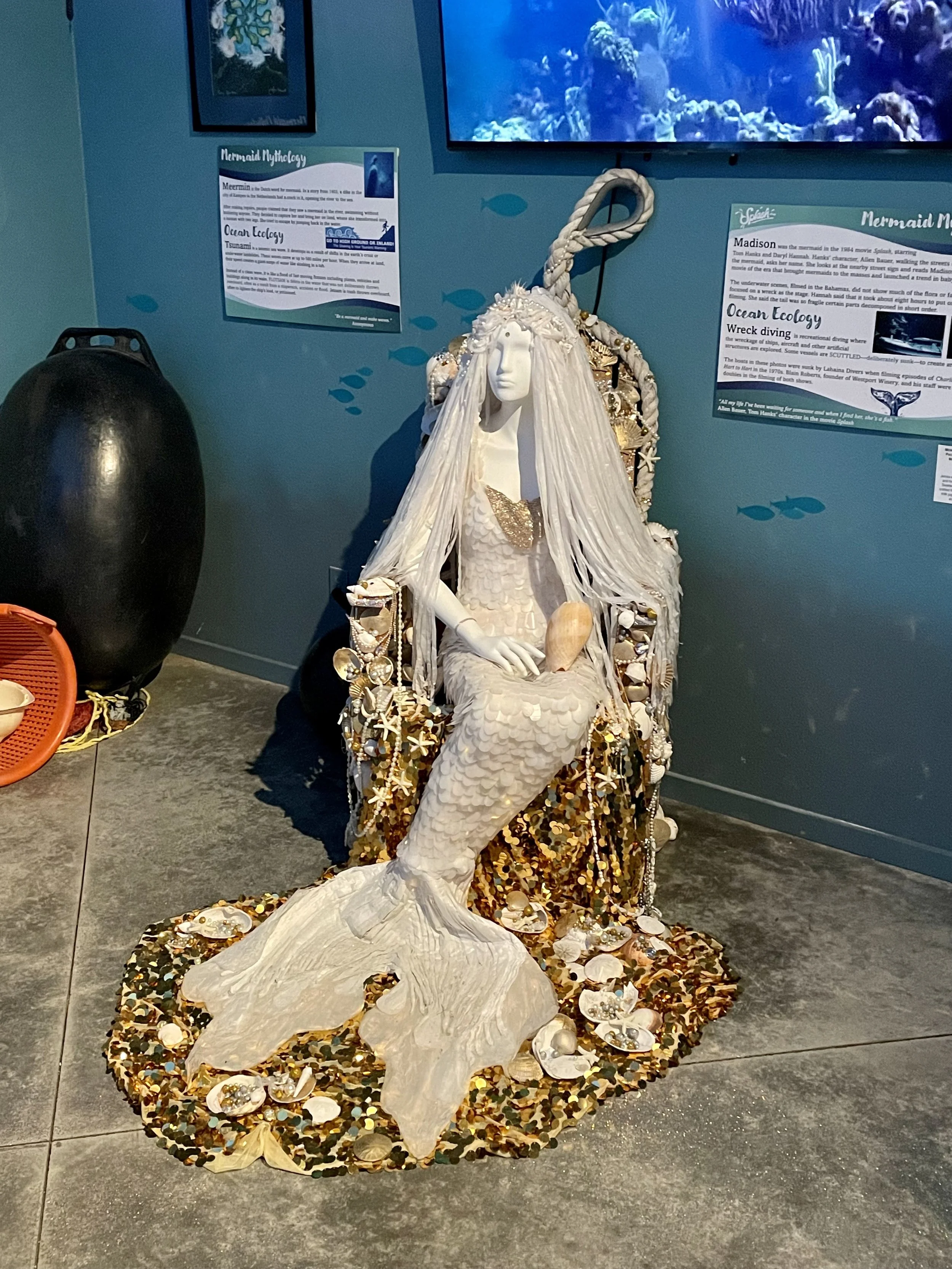
Meermin is the Dutch word for mermaid. In a story from 1403, a dike in the city of Kampen in the Netherlands had a crack in it, opening the river to the sea. After making repairs, people claimed that they saw a mermaid in the river, swimming without bothering anyone. They decided to capture her and bring her on land, where she transformed into a human with two legs. She tried to escape by jumping back in the water.

Ocean Ecology:
Tsunami is a seismic sea wave. It develops as a result of shifts in the earth’s crust or underwater landslides. These waves move at up to 500 miles per hour. When they arrive at land, their speed creates a giant surge of water like sloshing in a tub. Instead of a clean wave, it is like a flood of fast moving flotsam, including plants, vehicles, and buildings along in its wake. FLOTSAM is debris in the water that was not deliberately thrown overboard, often as a result from a shipwreck, accident, or flood. Jetsam is trash thrown overboard, often to lighten the ships load, or jettisoned.

Quote: “Be a mermaid and make waves“ ~Anonymous


Mermaid Mythology:
Ceasg (kee-ask) is a Scottish mermaid that is half woman and half salmon. The seafarer who captures her receives three wishes. Unfortunately, the Ceasq, like some other sea sirens, were known to lure sailors to their death. They were hard to kill since they placed their soul in a shell to hide it from humans. When a mermaid fell in love with a sailor, she would leave the sea and transform into a human. Rather than granting her husband three wishes, she would give him good luck for the rest of his life.

Ocean Ecology:
Salmon are ANADROMOUS, meaning they live in the ocean but migrate to fresh water to breed. There are five native species of salmon on the West Coast: Chinook, Coho, Chum, Pink, Sockeye.

Quote: “I think we're going to the moon because it's in the nature of the human being to face challenges. It's by the nature of his deep inner soul... we're required to do these things just as salmon swim upstream.“ ~Neil Armstrong


Mermaid Mythology:
Nibiinaabe, the Chippewa water spirit, are females with fish tails from Anishinabe folklore and said to be frightened by loud noises. They are also a clan symbol of the Ojibwe tribe. Lumpeguins are little mermaids of Wabanaki mythology. If someone steals their magical garments, they are under that person’s power. They have the ability to create food by turning a crumb into a infinite meal or bread from snow. Sabawaelnu are Mi’kmaq mermaids who control storms. Mi’kmaq people who understand their songs can forecast weather. They are known as water people or Halfway People.

Ocean Ecology:
Sea Turtles are reptiles with CARAPACE—shells that serve as their rib cage. Unlike other turtles, sea turtles cannot retract their head and limbs. The seven species are Green, Leatherback, Loggerhead, Kemp’s Ridley, Olive Ridley, Hawksbill, and Flatback.

Quote: “Try to be like the turtle, at ease in your own shell.“ ~Bill Copeland


Mermaid Mythology:
Tlanchana was a woman with a serpent or fish tail. She adorned her crown, necklace, and belt with creatures of the sea, from starfish to shells. Originally, she was an Otomi goddess known as Acapaxapo, said to have divine powers who delivered omens. The Aztecs later named her Altonanchane, which became Tlanchana. They are known as the highest altitude mermaids living in fresh water lakes in the mountains of Mexico. If rejected, she would wrap her tail around a man and drag him underwater to his death. They say she was often lonely and jealous of humans, so locals left her offerings to appease her malevolent nature.

Ocean Ecology:
Sea Star are plentiful with 2000 species from the arctic to the tropics, in a wide variety of colors. Most have five arms and can REGENERATE or regrow lost limbs. Sunflower sea stars are the largest and can have up to forty arms. Sea stars may live up to 35 years even though they have no brain and no blood.

Quote: “Write your secrets in the sand and trust them with a mermaid.“ ~Anonymous


Mermaid Mythology:
Mami Wata, or Mother of the Water, are water deities of Africa and the Caribbean. There is even a religious group called to praise the goddess, where an individual follower is called a “Mami Wata child.” This mermaid goddess is a compassionate healer and mother to all aquatic creatures. She can transform into a woman, fish, or mermaid, depending on her mood. She is often seen holding a water snake or eel around her shoulders.

Ocean Ecology:
Eels snap their jaws as they swim, but they are not threatening to bite. It is how they breathe. There are 40 species of moray, three species of conger, and two dozen snake eels in Hawaii. A group of eels is called a swarm. Wolf eel, common in the North Pacific, are fish and not true eel. They mate for life and grow to almost 8 feet long. The species is MONOTYPIC, meaning there is only one species in the group.

Quote: “The funniest thing about comedy is that you never know why people laugh. I know what makes them laugh but trying to get your hands on the why of it is like trying to pick an eel out of a tub of water.“ ~W.C. Fields


Mermaid Mythology:
Suvannamaccha translates to golden mermaid in a Hindu story from the 6th century. She is a daughter of Ravana, who appears in the Cambodian and Thai versions of the Ramayana. As a mermaid princess, she tries to spoil Hanuman’s plans to build a bridge to Lanka, but falls in love with him instead. Hanuman stays underwater with her until he is called back to complete the bridge. Once complete, Hanuman is needed by the king’s side and never sees his mermaid again. Her image is seen as a sign of good luck. She is known to wear a crown of gold and jewels.

Ocean Ecology:
Crown-of-Thorns is one of the world’s largest starfish. It preys upon and destroys coral reefs. While most common in Australia, it lives worldwide in warm waters from the Red Sea to Hawaii to the Caribbean. It is named for its venomous spines that are said to resemble the biblical crown-of-thorns. Starfish can reproduce by AUTOTOMY or self-amputation and regenerate the lost body part later, usually as a self-defense mechanism.

Quote: “I have heard the mermaids singing, each to each. I do not think that they will sing to me.“ ~T.S. Eliot, The Love Song of J. Alfred Prufrock


Mermaid Mythology:
Rusalki are some of the most beautiful water spirits found in Russia and Ukraine. In the spring and summer, they embellish themselves with flowers and green garlands. In the fall and winter, they transform to zombie-like corpses with hollow eyes, shallow skin, and adorn themselves with weeds. They are known to be more dangerous in June when they sing in the night to lure young men to the water as part of their vengeful nature. A famous opera by Antonín Dvořák tells the story of a Rusalka who is in love with a human prince. She drinks a potion to become human. The prince knows if he does not love her that he will die. They are happy for awhile but eventually his love fades and her kiss kills him.

Ocean Ecology:
Coral are the flowers of the sea. They occupy 0.1% of the ocean but are responsible for 25% of the habitat for marine life. Each COLONY—a group of identical polyps—create structure and beauty for divers, habitat for other marine life, and protection for land masses. Each polyp is a sac-like animal typically only a few millimeters in diameter and a few centimeters in height. A set of tentacles surround a central mouth opening.

Quote: “If you sign to the mermaids, they come when you’re drowning.“ ~Tori Amos


Mermaid Mythology:
Parthenope was a siren in Greek mythology. He name translates to “maiden-voiced.” The daughter of the god Achelous and the muse Terpsichore, she cast herself into the sea and drowned when her songs failed to entice Odysseus. Her body washed ashore in Naples, Italy. When people settled there, they named their city Parthenope in her honor. In a nineteenth-century myth, she was a mermaid in the Neapolitan gulf. One day, she met a centaur named Vesuvius. They fell in love, but Zeus, jealous and possessive, turned the centaur into a volcano. Parthenope could only see her beloved without being able to interact. The coast assumed her features so she could rejoin Vesuvius in a love pact.

Ocean Ecology:
Black Coral is typically white, red, green, yellow, or brown, and rarely black. Only after is is harvested, cut, and polished, do you see the black luster. As the state gem of Hawaii, it is used in jewelry. It is a soft, deep water coral that is SUSTAINABLE—able to exist continually—as a harvested product.

Quote: “Dive deep for the treasure that you seek.“ ~Anonymous


Mermaid Mythology:
Amphitrite was the eldest of fifty Nereids who toured the oceans riding tame sea creatures in Greek mythology. As Poseidon’s wife, she was queen of the sea, and the mother of Triton, a merman. The three-pronged spear called a trident was the symbol of Poseidon, while Amphitrite wore a crown of crab claws.

Ocean Ecology:
Crab are CRUSTACEANS, a group of 45,000 species including lobster, shrimp, and wood lice. Dungeness Crab, local to Washington State waters, are considered the best tasting. They are caught in crab pots using bait. The Brown Box Crab is a type of King Crab. For protection, it folds its legs in to look like a box. A group of crab is called a cast.

Quote: “You’ve got your own style, now let it shine through and remember no matter what, you got to be you.“ ~Sebastian, the crab, King Triton’s advisor


Mermaid Mythology:
Triton was the son of Poseidon and Amphitrite. His lower body is a fish, while human on his top. He was said to blow a shell like a trumpet to tame or inflame the sea. Legends say if sailors got lost of the lake, Triton helped them by creating the island of Thera to prevent drowning. Not all accounts of Triton were positive. When cattle were missing, or a storm killed sailors out at sea, many assumed that Triton was to blame. People knew that they wouldn’t stand a chance if they tried to go head-to-head with a god, so to appease his wrath, they would leave a chalice of wine for him at the shore as a peace offering.

Ocean Ecology:
Triton’s Trumpet, known scientifically as Charonia tritonis, is one of the few predators of the Crown-of-Thorns starfish. This giant GASTROPOD—snail or slug—reaches up to two feet in size, making it one of the largest mollusks on the coral reef.

Quote: “No trumpets sound when the important decisions of our life are made. Destiny is made known silently.“ ~Agnes de Mille


Mermaid Mythology:
Nayada is a Russian form of naiad, or water nymph, associated with fresh water fountains or springs as depicted in one of John William Waterhouse’s paintings in 1872. As part of the Pre-Raphaelite Brotherhood of painters, he had a fascination with Greek mythological creatures including undine, mermaids, and nymphs, as well as characters from Arthurian legends. MYTHS are a type of folklore in various societies with creatures that are usually gods, demigods, or supernatural humans.

Ocean Ecology:
Agates can be found along streams, old riverbanks, and gravel shoals on beaches. They are also found on mountains and in the desert like the famous Ellensburg Blue Agates. Sizes range from tiny pebbles to large rocks. A microcrystalline form of quartz, agates are semi-precious gemstones formed millenia ago. They are considered to bring good luck and subsequent happiness.

Quote: “She is a mermaid on dry land and the world is her ocean.“ ~J. Iron


Mermaid Mythology:
Cecaelia have the head, arms, and torso of a human and the tentacles of an octopus. They are known as either mermaids or sea witches. In The Little Mermaid, the character of Ursula is a cecaelia who once lived in the royal palace of King Triton, the king of the underwater kingdom of Atlantica.

Ocean Ecology:
Octopus appear in legends as sea monsters. There are 300 species of octopus. The largest is the giant Pacific octopus weighing up to 600 pounds with an arm span of 30 feet. Like most cephalopods, octopus release ink as a defense mechanism. They regulate their color and texture as camouflage. Octopus are SEMELPAROUS, which means they only reproduce once before death.

Quote: “The fact that three-fifths of an octopus’ neurons are no in their brain, but in their arms, suggests that each arm has a mind of its own.“ ~Sy Montgomery


Mermaid Mythology:
Ursula, in the Disney versions of The Little Mermaid, is portrayed as a sea witch with tentacles instead of a tail. In Hans Christian Andersen’s story, the character doesn’t have a name but she is indeed a mermaid, albeit one with a bad reputation. In the movie, the nautilus necklace is where Ariel’s beautiful singing voice is kept after she trades it for legs.

Ocean Ecology:
Nautilus shell chambers are in the Fibonacci Sequence. The Fibonacci Sequence: 3, 5, 8, 13, is where each number is added to the previous. Music reflects that series of numbers. In a scale, the dominant note is the fifth note, which is the eighth note of all thirteen notes that make up an octave. There are six species of nautilus. Each can withdraw into its shell and close the opening with a leathery hood formed from two specially folded tentacles. They are found in the Indo-Pacific Ocean as deep as 380 FATHOMS. A fathom is six feet.

Quote: “The Nautilus was piercing the water with its sharp spur, after having accomplished nearly ten thousand leagues in three months and a half, a distance greater than the great circle of the earth. Where were we going now, and what was reserved for the future?” ~Jules Verne


Mermaid Mythology:
Ariel is based on a character from Hans Christian Andersen’s fairytale The Little Mermaid written in 1837. Disney adapted the story in 1989 for their animated film. The most famous Little Mermaid sculpture is in Copenhagen, Denmark. There are thirteen replicas around the world.

Ocean Ecology:
Flounder, Ariel’s best friend in the movie, is a Royal Angelfish, not a flounder. The Flounder family includes a variety of flatfish. At hatching, a flounder has an eye on each side of its body. Through METAMORPHOSIS—abrupt body change after birth—one eye migrates to the other side of its body. The largest flounder, the Pacific Halibut, weighed 482 pounds, about the same weight as a black bear.

Quote: “Who says that my dreams, have to stay, just my dreams?“ ~Ariel, The Little Mermaid


Mermaid Mythology:
Mélusine was written in 1393 by Jean d’Arras. In the story, Pressine married the king of Albany, Scotland. Her only rule was the he never see her or their daughters bathe. In excitement at Mélusine’s birth, he breaks his promise. In fury, Pressine puts a curse on Mélusine making her a mermaid. When Mélusine marries, she exacts the same promise from her husband. Sadly, he sees her bathing. At that point her arms become wings and she disappears. Her story inspired the Starbucks logo. The Starbucks’ name comes from a character in the book Moby Dick by Herman Melville.

Ocean Ecology:
Pufferfish are poisonous with enough tetrodotoxin in its organs to kill thirty adults. The poison is 1200 times more deadly than cyanide. There is no known ANTIDOTE or substance to counteract the poison. Puffing up is the fish’s primary defense since their normal slim body becomes too big to bite. It takes the fish over five hours to deflate.

Quote: “Be a mermaid. Swim fast, wear a crown, and dream big.“ ~Anonymous


Mermaid Mythology:
Lorelei is from a poem written by Heinrich Heine in 1822. It tells of a beautiful maiden who waited for her lover on a rock cliff on the Rhine River. When he failed to meet her, heartbroken, she jumped to her death. They say her spirit remains, seeking revenge as she sits on the rock, combing her long hair and singing softly. Sailors, so enchanted by her beautiful song, run aground trying to find her. In German, the name Lorelei translates to “murmuring rock.”

Ocean Ecology:
Venus Comb or murex pecten is a snail with spines on both sides of its shell. It is said that mermaids use this shell to comb their hair. Over one hundred spines provide its protection from predators and from sinking into the soft mud on the sea floor. To eat, the animal excretes a softening fluid onto the shells of clams and barnacles, then scrapes it with its hundreds of tiny teeth. BARNACLES are sedentary crustaceans and attach to boats, docks, rocks, and even other animals like whales.

Quote: “Rainbows and mermaids are proof that imagination and beauty go hand in hand.“ ~Anonymous


Mermaid Mythology:
Madison was the mermaid in the 1984 movie Splash, starring Tom Hanks and Daryl Hannah. Hanks’ character, Allen Bauer, walking the streets of Manhattan with the mermaid, asks her name. She looks at the nearby street sign and reads Madison. This was the movie of the era that brought mermaids to the masses and launched a trend in baby names. The underwater scenes, filmed in the Bahamas, did not show much of the flora or fauna, and instead focused on a wreck as the stage. Hannah said that it took about eight hours to put on the tail before filming. She said the tail was so fragile, certain parts decomposed in short order.

Ocean Ecology:
Wreck Diving is recreational diving where the wreckage of ships, aircrafts, and other artificial structures are explored. Some vessels are SCUTTLED—deliberately sunk—to create artificial reefs. The boats in photos displayed in the museum were sunk by Lahaina Divers when filming episodes of Charlie’s Angels and Hart to Hart in the 1970’s. Blain Roberts, founder of Westport Winery, and his staff, were stunt doubles in the filming of both shows.

Quote: “All my life I’ve been waiting for someone and when I find her, she’s a fish“ ~Allen Bauer, Tom Hanks’ character in the movie Splash


Mermaid Mythology:
Moclips mermaid was revealed on May 27, 2012, when the Animal Planet released Mermaids: The Body Found. In the show, a young person allegedly finds a mermaid on the beach in Moclips, Washington. The premise was the scientists seek to learn more about these mysterious marine animals, but the government hides the evidence. The nearby Naval Station in Pacific Beach acts as a backdrop to the story. Many people were fooled by the movie as the disclaimers were few. The producers even went to far as to create a website that was “taken down by the government.” The show was called a MOCKUMENTARY, which is a fictional film, versus a documentary which is factual.

Ocean Ecology:
Razor Clams are found from Pismo, California, to the Aleutian Islands near Alaska. The underwater canyon off of Moclips is one of the best breeding grounds for razor clams. Clams are located by looking for dimples or donut shapes in the sand. Razor clam digging is allowed during certain low tides using clam guns or shovels. There is a 15 clam limit in Washington and diggers must have a license.

Quote: “A mermaid has not an immortal soul, nor can she obtain one unless she wins the love of a human being. On the power of another hangs her eternal destiny.“ ~Hans Christian Andersen


Mermaid Mythology:
Feejee was made famous in 1842, when a Dr. Griffin arrived in New York with a mermaid he claimed to have captured in Fiji to display at the American Museum of Barnum. Flyers of a mermaid with the body of a young and beautiful woman were in stark contrast to the creature on display. In his autobiography, Barnum said it was “ugly, black, and dry…” It was a monkey body sewn to a fish tail. Griffin’s real name was Levi Lyman, and he was an accomplice of Barnum in one of history’s most famous hoaxes.

Ocean Ecology:
Lionfish are native to Fiji and the Indo-Pacific. They are one of the most INVASIVE species—animals places in a non-native environment that they harm—on Earth. One lionfish can reduce juvenile reef fish populations by 79%. Goldfish released into the wild are another example of invasive fish.

Quote: “Fortune always favors the brave, and never helps a man who does not help himself.“ ~PT Barnum


Mermaid Mythology:
Hannah Fraser is the first mermaid working as an underwater performance artist, and model for film, events, focused on environmental activism. By using her unique link to the ocean, she inspires and educates people on the importance of marine life. Hannah is a role model of self-empowerment for young women across the globe who see that she has made her dreams a reality, no matter how unlikely the odds!

Ocean Ecology:
Whale Sharks are the largest fish on earth. They are up to 62 feet long. The skin on an adult whale shark is 4 inches thick and topped with rigid, triangular scales called denticles. They have a lifespan estimated up to 130 years. As plankton feeders they pose no threat to humans. PLANKTON are organisms that are too small or weak to swim against the current and exist in a drifting state. Nekton are tiny strong-swimming organisms that move freely and are not controlled by currents.

Quote: “A mermaid’s gift is to inspire people to rekindle their relationship to nature and a way to communicate the environmental issues that face us at this point. The ocean is the birthplace of life on Earth, and if I can be a visual link to inspire other humans who have become disconnected from this amazing world, I feel I have done something worthwhile.” ~Hannah Fraser


Mermaid Mythology:
Una The Mermaid is the Northwest’s first in tank underwater performer. Her 900 gallon tank was inspired by vintage circus wagons. Una is the founder of the Portlandia Mermaid Parade and Festival. In 2023, she was the protagonist in the docu-fiction art film Siren’s Call. She studies CONCHOMANCY (konk-oh-man-sea)—a form of divination using shells—to read the future or gain insights. As a shell oracle, the Geoduck (also known as the King Clam) represents digging deep into matters, longevity, and fortitude.

Ocean Ecology:
Geoduck (pronounced “gooey-duck”) are large clams found along the West Coast. They are also known as Elephant Clam due to their long siphon or “neck.” They are harvested in the wild and via aquaculture, mostly in Washington State. The longest lived geoduck on record was 168 years old.

Quote: “The Ocean is the mother of us all, and she represents nurturance of life, and cycles.“ ~Una the Mermaid


Mermaid Mythology:
Olive The Alchemist —a person who transforms through a seemingly magical process—is a PADI certified mermaid instructor and founder of the Seattle Mermaid School, the Pacific Northwest’s exclusive portal to experiencing the underwater world of mermaids firsthand. The Alchemist has years of experience in a rigorous, professional-level role as a mermaid character performer with Walt Disney World Entertainment and was 2021-2023 Miss Mermaid Washington.

Ocean Ecology:
Tiger Sharks are solitary and nocturnal apex predators with females reaching 15 feet. They have the largest food spectrum of all sharks with diets that include whales, crustaceans, fish, seals, birds, snakes, turtles, squid, dolphins, and other sharks. Tigers are second only to Great Whites in attacks on humans, although these are rare. They are sometimes preyed upon themselves by orca pods.

Quote: “Without sharks, you take away the apex predators of the ocean, and you destroy the entire food chain.“ ~Peter Benchley


Mermaid Mythology:
Rachel The Sailing Siren is a certified freediving and mermaid instructor who owns Aquanauts Freediving LLC in Las Vegas. Rachel joined the 2023 US National Team for the CMAS Freediving Depth World Championships. She was named Fire Entertainer of the Year 2016, Miss Mermaid Nevada 2022, and Miss Sea Queen of Nevada 2023. She was in Black Panther 2: Wakanda Forever, on American Ninja Warrior, and in the Netflix documentary MerPeople. Rachel is lead performer at the annual International Mermaid Museum Festival and is dedicated to teaching ocean ecology.

Ocean Ecology:
Scorpionfish look like the surface where they perch, so via camouflage they can ambush their prey. The titan scorpionfish is ENDEMIC or native and only found in Hawaii. Its Hawaiian name is nohu, which is also the name of the puncture vine. Their dorsal spines have a powerful hemotoxin that when injected is similar to the bite of a rattlesnake or black-widow spider.

Quote: “The sea, the great unifier, is man’s only hope. Now, as never before, the old phrase has a literal meaning: we are all in the same boat.“ ~Jacques-Yves Cousteau


Mermaid Mythology:
Nikolai was built in the late 1790’s by King Kamehameha’s shipbuilders. It was the second schooner built in Hawaii, and named Tamana after the King’s favorite wife. In 1805, he traded the 45 tons ship for a larger boat. That owner then sold it to Russian Captain Pavl Slobodchikov, and it was renamed the Sv Nikolai. On November 1, 1808, Nikolai was sailing from Sitka to establish a colony on the Oregon Coast. In a squall, the boat wrecked on a reef near Destruction Island. The crew, including the captain’s wife, survived the wreck, thus making her the first non-native woman on the Washington Coast. Some research says the couple were captured by the natives and died in captivity. Other stories suggest upon rescue she opted to stay with the tribe while the captain left in shame.

Local History:
Stan Kurylo was working on a fishing trawler off of Westport in the 1990’s. When they pulled their net, Stan’s side was difficult to lift because of an anchor. Stan and his wife Patricia decided to keep it as a memento on their deck. After touring the International Mermaid Museum they donated it along with the chart marking where the anchor had been found. The museum’s executive director researched and found this anchor to be from the Nikolai. Museum team members built the shipwreck for its display.

Quote: “What an anchor is to a ship, hope is to the soul.“ ~June Hunt


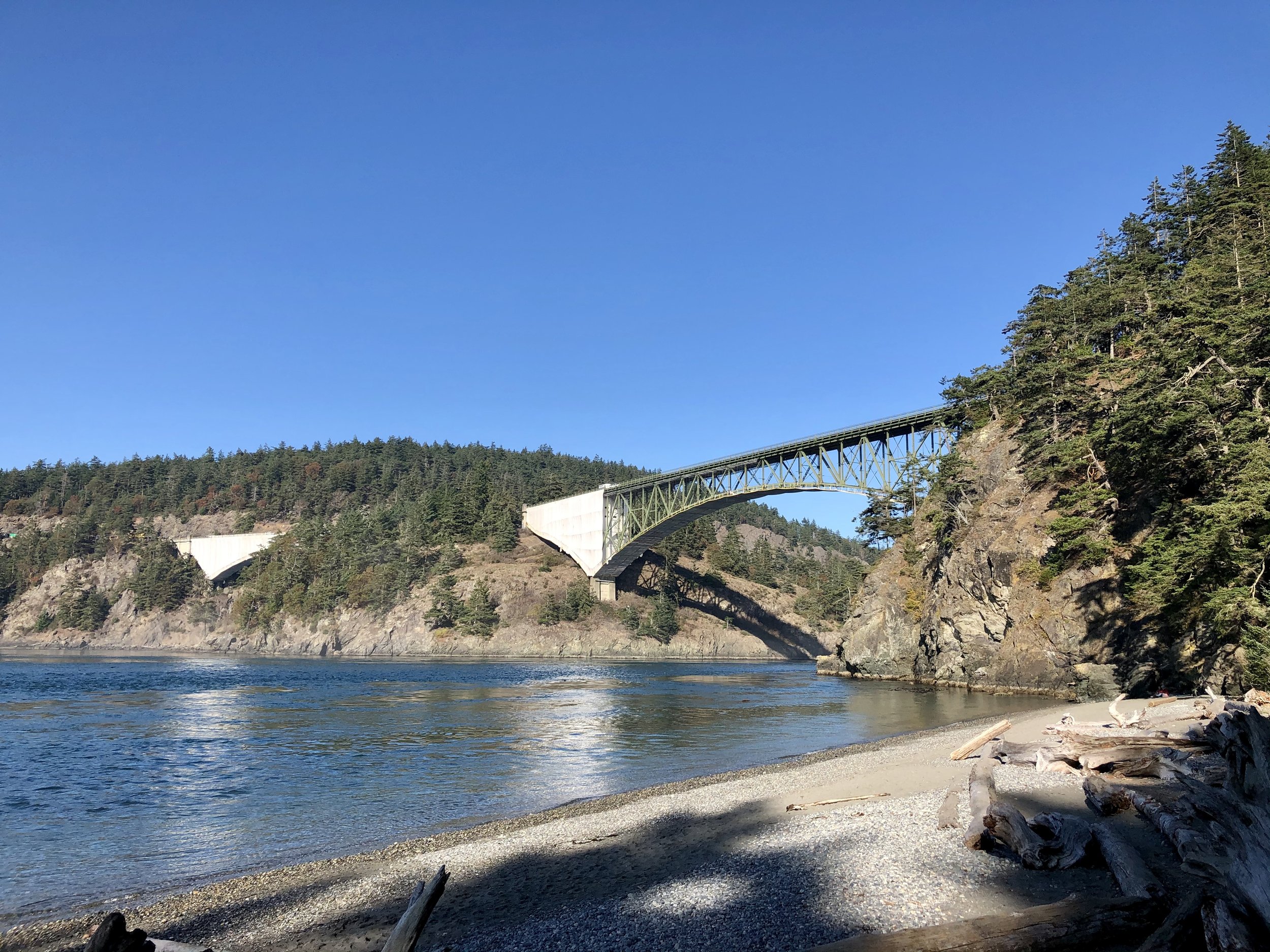
One mermaid that I noticed was missing from the museum is one I discovered locally in Northwestern Washington when I first visited Anacortes in 2019. Known as the “Maiden of Deception Pass,” Ko-Kwal-alwoot, was a young girl of the Samish Nation who was transformed into a sea spirit at Rosario Beach in Deception Pass State Park. Watch and hear the story as told by Samish Indian Nation manager Leslie Eastwood or continue reading one version I found online.

Samish Legend:
According to Samish tribal tradition, Ko-kwal-alwoot (pronounced “Kwuh-kwal-uhl-wut”), a beautiful Samish Indian girl, lived in a village in a protected cove at Rosario Head near Deception Pass, between Whidbey and Fidalgo Islands. Her raven-black hair shined like obsidian and reached below her waist. She was gathering seafood one day, near where visitors sit on the shore, when a young man from beneath the sea saw her. He was very handsome and his skin shone like silver. His eyes were large and luminous. He immediately fell in love with the young woman. But when this man of the sea asked her father for her hand in marriage, he refused for fear she would try to follow her suitor and drown. The young man warned Ko-kwal-alwoot's father that he held great power and that the seafood would disappear unless permission was granted for his daughter to marry. Her father was a chief and not disposed to succumb to threats, especially from a fish. He refused. Sure enough, clams, crabs and the succulent goose tongue that grew on the rocky shore became scarce. The nearby sweet spring water dried up and no longer trickled down the beach. Villagers protested that they were hungry for seafood. Under pressure, Ko-kwal-alwoot's father granted permission for the marriage. They were married at the sea’s edge. The bridegroom wasted no time returning to the water. He had only to beckon to his bride and Ko-kwal-alwoot followed, slipping beneath the waves without a backwards glance. Once again seafood became plentiful and icy, clear water gushed from the nearby spring. Ko-kwal-alwoot returned to her people once a year for four years. Barnacles disfigured her once lovely hands and arms. Her long raven hair was intermingled with long, stringy kelp. Chill sea winds followed wherever she walked and she seemed unhappy out of the sea, away from her husband. Seeing her unhappiness, Ko-kwal-alwoot's people told her she did not need to return to them each season. Since that day, she has been the Samish Tribe's guiding spirit, and through her protection there has always been plenty of seafood and pure, sweet spring water. It is said that if you sit on nearby Rosario Head and stare out across Rosario Strait long enough, and if you believe the legend, you may glimpse Ko-kwal-alwoot's long, black kelp-filled hair streaming in the current just below the surface.

Native Heritage:
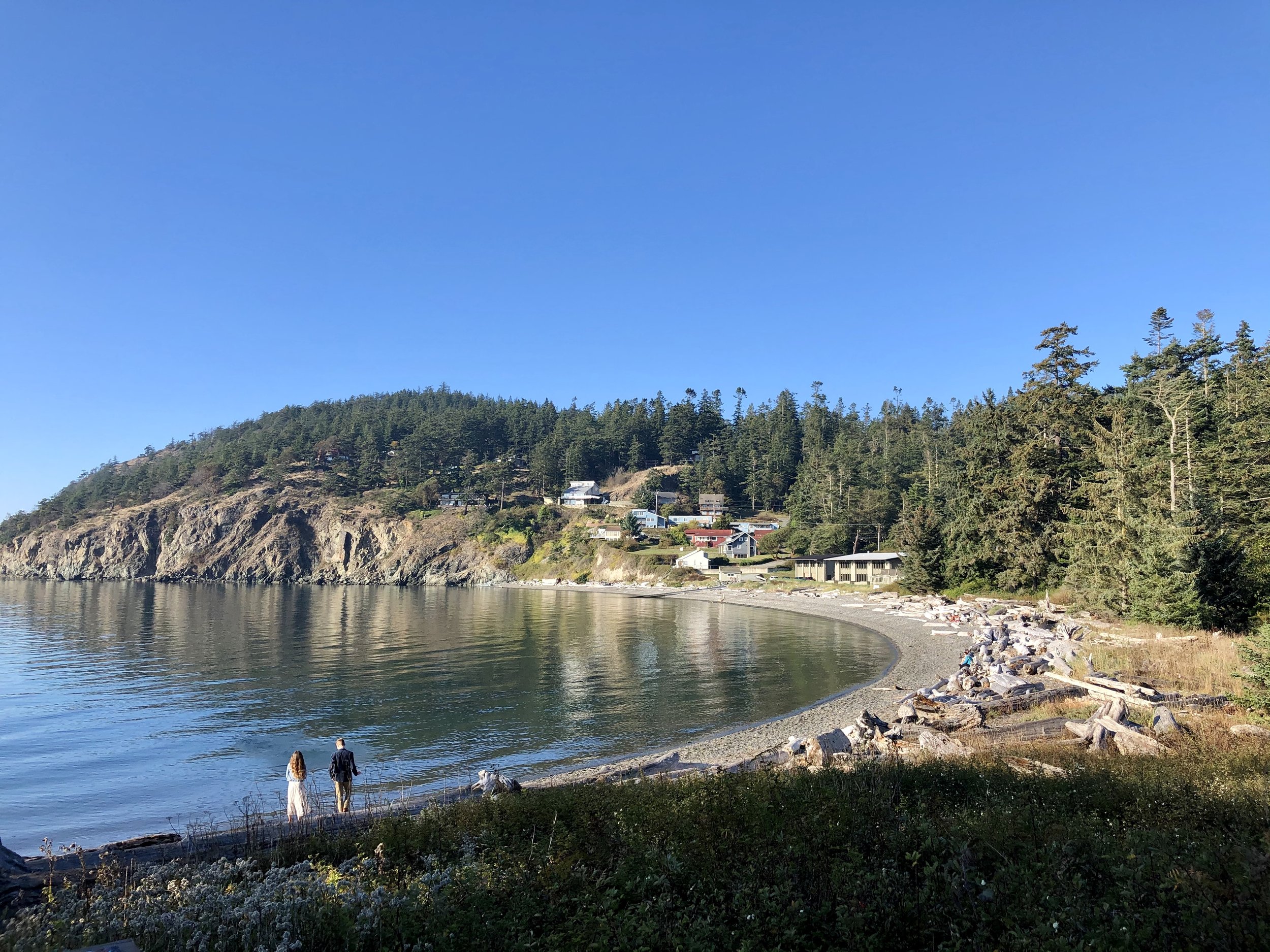
A 23-foot-high story pole, a joint project of the Samish Tribe and the Skagit County Centennial Commission, was carved from red cedar (donated by the U.S. Forest Service) by Tracy W. Powell of Anacortes, working under the careful guidance of Samish elders, and erected in 1983. The statue has two sides, one portrays Ko-kwal-alwoot as she lived on land, while the other shows her as she lived in the sea, with kelp for hair and scaly skin. There are story posts around the statue that tell this traditional story with wonderful images, honoring the Coast Salish people. I highly recommend visiting the park, especially Bowman Bay and Rosario Beach on the north end of the Deception Pass State Park. I also encourage you to read about the importance of kelp forests and how warming oceans are shrinking them up and down the West Coast.


I’m sure there are many other merfolk and water spirits missing from this list, though I have to give the International Mermaid Museum a lot of credit for all the research they did and what they put together. I already know of a few more just from the research I did for this blog post, including Amabie, Nyai Roro Kidul, Shinjiki, Jengu, and Undine, but there are so many more mermaids, mermen, merfolk, water spirits, sirens, and mythological sea creatures just from what I found on Wikipedia. Therefore, I would sure love to hear from my readers about any others that are missing. Please leave a comment with the name(s) of these mesmerizing creatures of the sea and tell me what you know about them, or their origins, with link(s) if possible. Thank you!

I also really enjoyed this beautiful artwork called “Timorian” by Marshelle Backes from Montesano, WA, that was hanging in the museum. While looking online for more information on it, I accidentally stumbled upon an article about the Wawata Topu, known as the Mermaids of Timor-Leste. Timor-Leste, or East Timor, is a Southeast Asian nation occupying half the island of Timor, situated near Indonesia and Australia. The island is ringed by coral reefs teeming with marine life. The incredible story of these women fishers and divers is the subject of an award-winning documentary.


I hope you enjoyed this post on mermaid myths, folklore, and people, as well as learning about some of the fascinating creatures that live in our oceans. I always knew I was intrigued by mermaids and water, so getting immersed in all this was fun for me, and the knowledge acquired something that I will treasure forever!

Comment

2 Comments

I Believe In Mermaids 🧜‍♀️

While I was camping trip at Grayland Beach State Park, I heard about the famous Westport Winery Garden Resort, winner of 2022 Washington Winery of the Year! The resort is located halfway between Aberdeen and Westport and features wine tasting, a distillery, a restaurant, the International Mermaid Museum, an expansive garden to explore, and even some lodging!

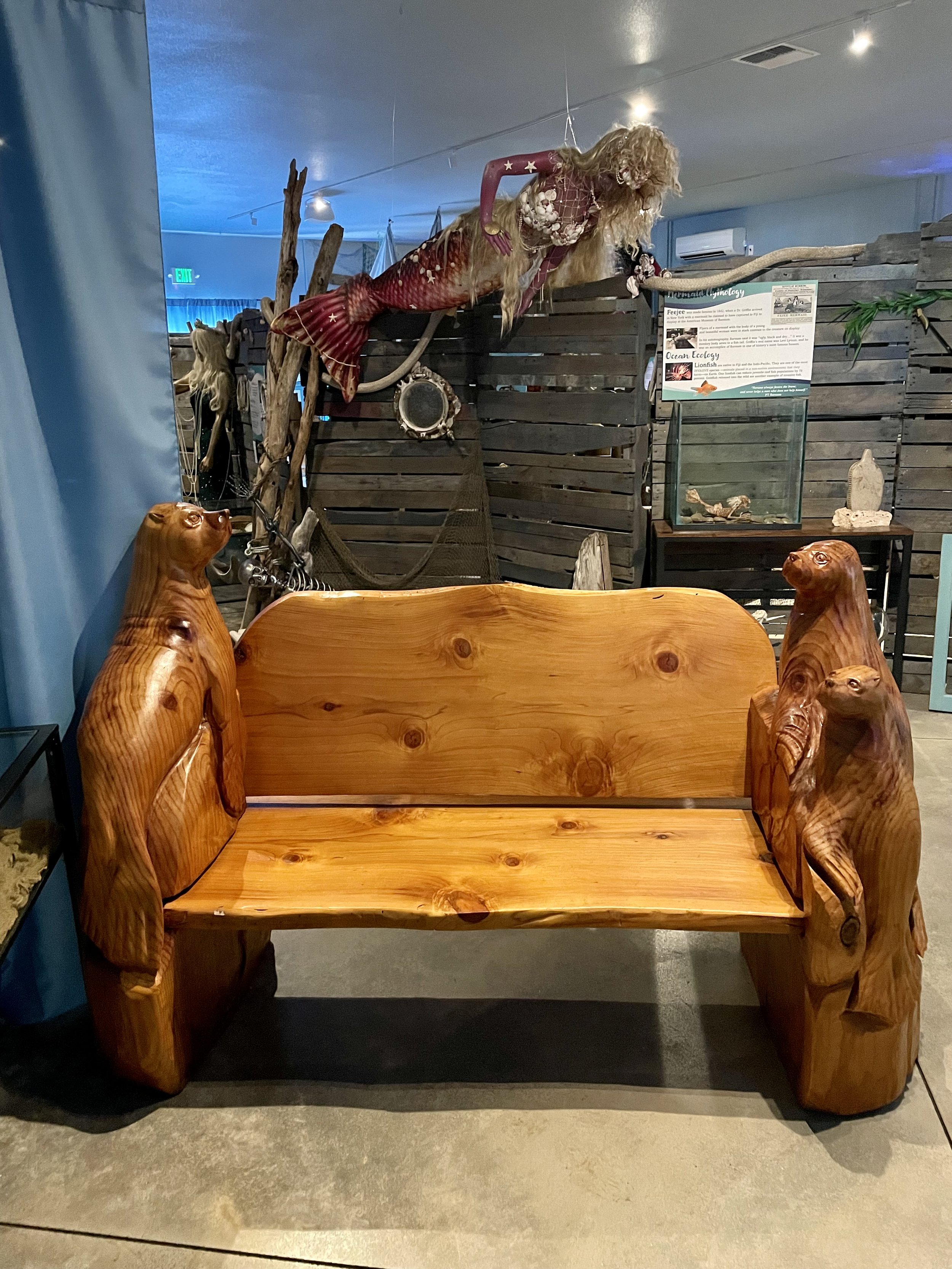
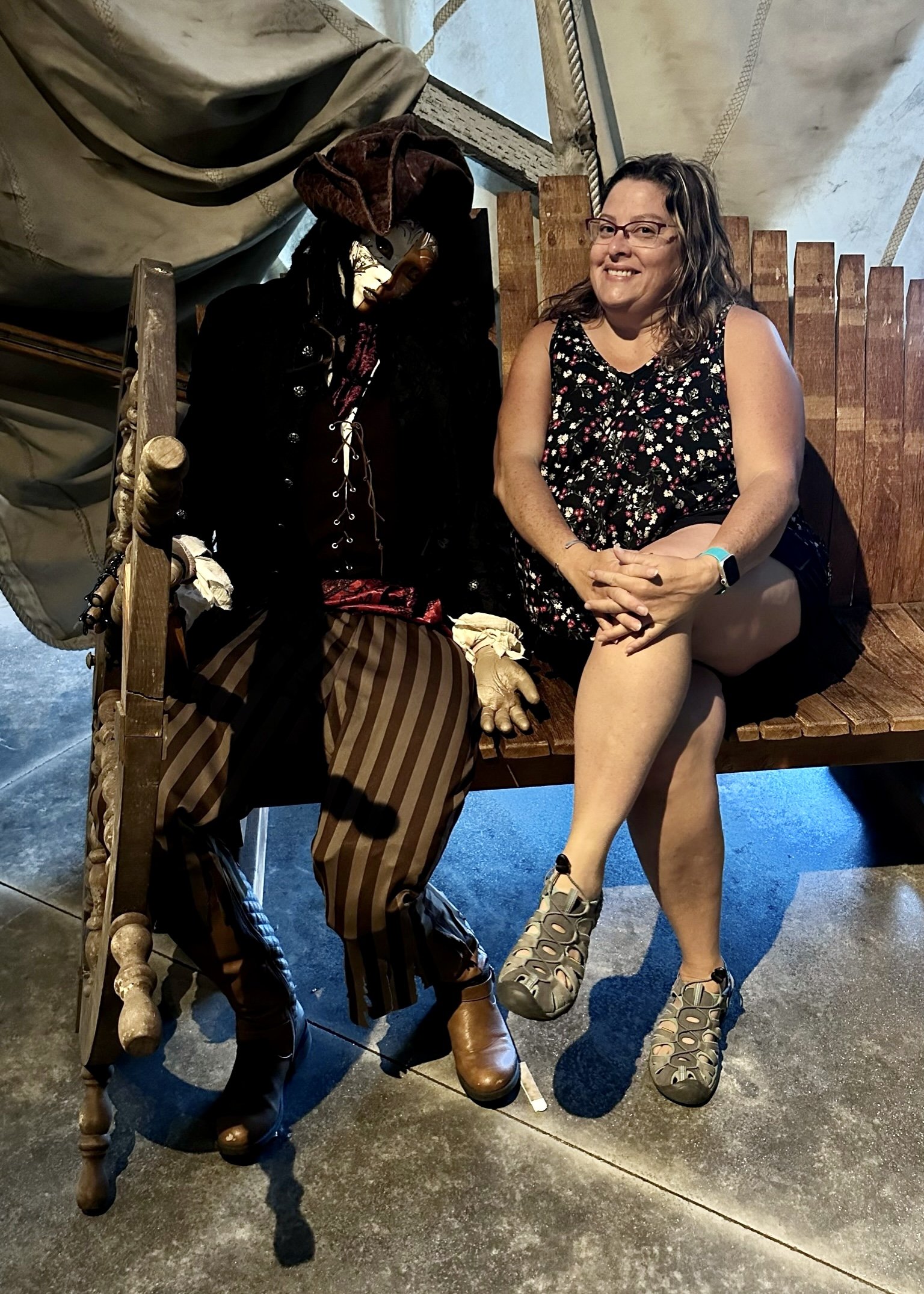
One of my first PNW friends and fellow blogger Aimee Danielson was the perfect partner-in-crime to indulge in the quirky museum as we both identify as mermaids, so I was glad she joined me on this trip. The Mermaid Museum costs only $3 for adults and is totally worth the adventure of learning about ocean ecology from “seashore to sea floor” and getting immersed in mermaid lore which all oceanic countries have. I particularly enjoyed reading all the mermaid mythology signs that were tastefully done with folklore tales and tied in to real oceanic facts. In addition to mermaid culture throughout the ages, there are also displays of physical artifacts, such as cannonballs from historic ships, hag stones, coral reefs, and king crabs. No museum experience would be complete without various mermaid and mermen statues, which despite being a bit kitschy, Aimee and I made the most of it, having a blast posing with them.

My favorite part of their mission statement is, “Mermaids in storytelling encourage people to see the undersea environment, not just through the lens of marine life, but through the view of humans in the underwater world, thus helping them better understand the importance of clean oceans, the sea as a living environment, and the reality of ocean exploration as one of the last great adventures on earth.” I feel like the museum really accomplished this and I found the whole experience fascinating, fun, and informative! I also really enjoyed their outside gardens that had some very impressive mermaid statues and creations, so be sure to walk around and explore the whole compound to get the full experience.


After exploring the Mermaid Museum and spending some money in their elaborate gift shop, Aimee and I headed to winery next door so I could do some wine tasting. I went with a recommended tasting of red wines by one of their knowledgeable tasting room associates. Not only did I enjoy their wines, but I also loved how articulate and entertaining their one-line tasting notes are with a recommended musical pairing, which I found to be a brilliant idea! I tasted the Smoky Nor’wester Merlot/CF/CS blend, the True Blue Malbec, the Nirvana GSM blend, the Bella Sangiovese, and the Surfer Syrah. My favorite was surprisingly the Smoky Nor’wester as I don’t generally love Merlot, but it was a very bold and smooth wine and I couldn’t resist to buy a bottle. Just to give you an idea of their wine tasting notes, the Nor’wester is “like fireworks in the sky or a good spanking” and you should enjoy it while listening to “Perfect” by Ed Sheeran. I’m ready for those fireworks, the spanking, and some good pop music when I drink that bottle!! A tasting of five wines is generally $10 but if you buy a bottle, the fee is waived. The bottle prices are reasonable in the $30-$38 range and each one benefits a regional organization. I’m actually considering becoming a wine club member as I was quite impressed with their brand of red wines. After all, Westport Winery is the number seven top platinum winning winery in the Pacific Northwest!

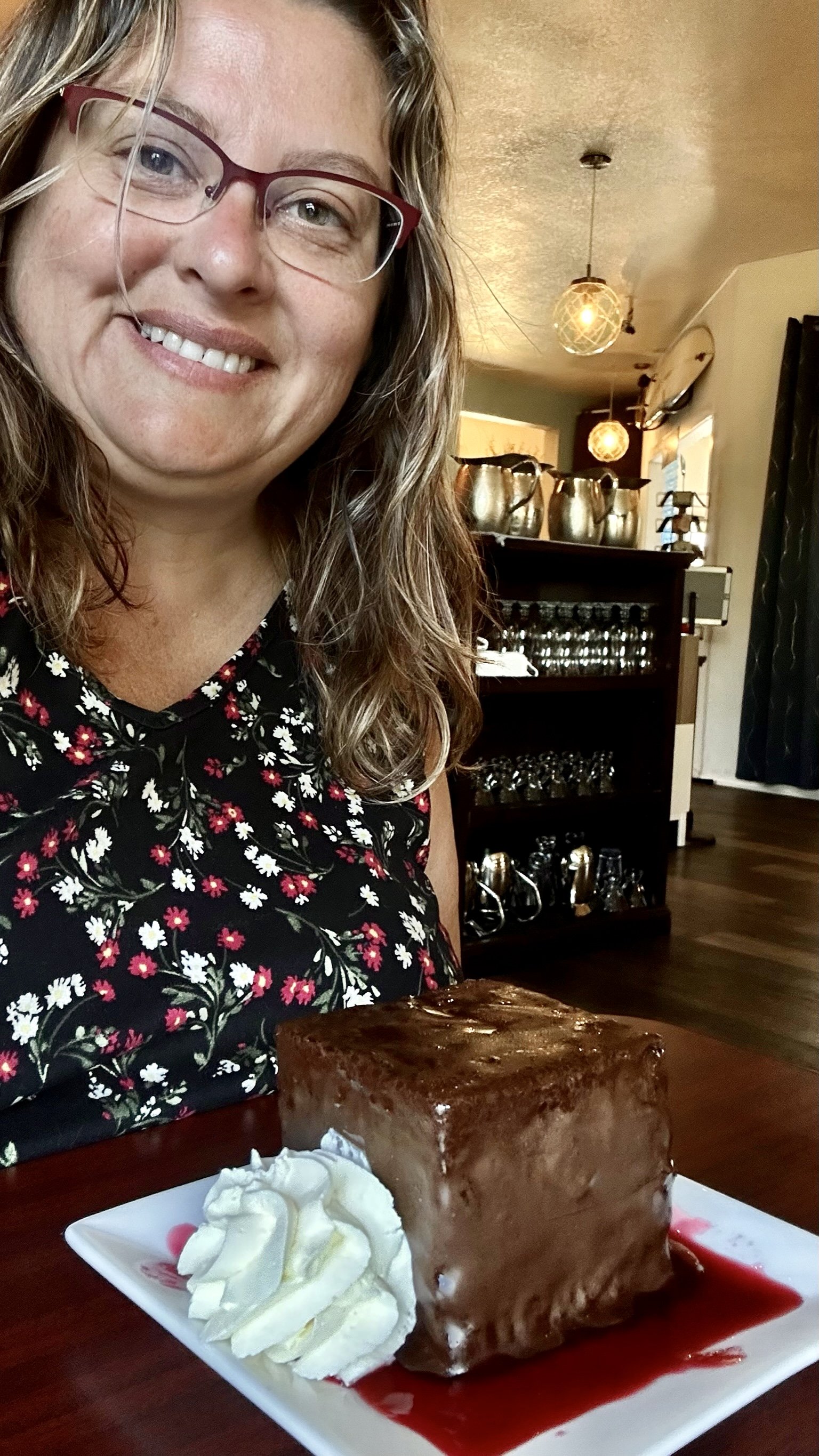
Aimee and I also stopped by the Sea Glass Grill because we heard their desserts are phenomenal. We each had their Homemade Ding Dong, a dark chocolate cake with chantilly cream, chocolate couverture and raspberry coulis, and it was fantastic! We really should have shared one because they are pretty big and super rich, but no worries, we took our uneaten halves and ate them later that night. Next time I come here, I plan to eat a whole meal at their grill because it all looked delicious!

Check out my friend Aimee’s blog about our mermaid adventure together and the Starbuck logo evolution. Aimee is an avid blogger and has a lot of experience traveling around the PNW, so I recommend following her adventures, plus you can download a FREE e-book on Washington State Parks!


My dreams of being a mermaid may come to flourish in 2024 when the Mermaid Festival hits the museum! I plan to be there some time between Saturday, April 6 through Sunday, April 14 to experience everything this 9-day event has to offer, including Northwest’s famous Una the Mermaid, Olive the Alchemist (founder of the Seattle Mermaid School), Vertical Axis performers Nick Perry and Amanda Thornton, Pacific Northwest Unicorns, Rachel the Sailing Siren, Mermaid Pockets of What Dwells Beneath, Pirate Cliff, and so much more! Who wants to join me in this all-ages celebration of the sea?

Check out my blog post on Mermaid Mythology & Ocean Ecology, as learned from International Mermaid Museum.

2 Comments

Comment

Grayland Beach State Park & Westport

This August I was supposed to go camping in the North Cascades National Park right next to Diablo Lake at Colonial Creek South Campground. As some of you may know, getting a sought after campsite can be like getting concert tickets in which you have to get up at 6:55am and select the site you want and click add to cart and checkout at the right time in order to get the booking. It took me 7 attempts back in February to get one of two van accessible sites closest to the lake! Due to the Sourdough Fire that started on July 29th by a lightning strike, my camping reservation was canceled in mid-August as the area was evacuated and SR-20 highway was closed. Luckily there is this awesome PNW Campground Trading group on Facebook and I found a great replacement camping trip at Grayland Beach State Park in the Southwest part of Washington and a spot I haven’t explored yet.

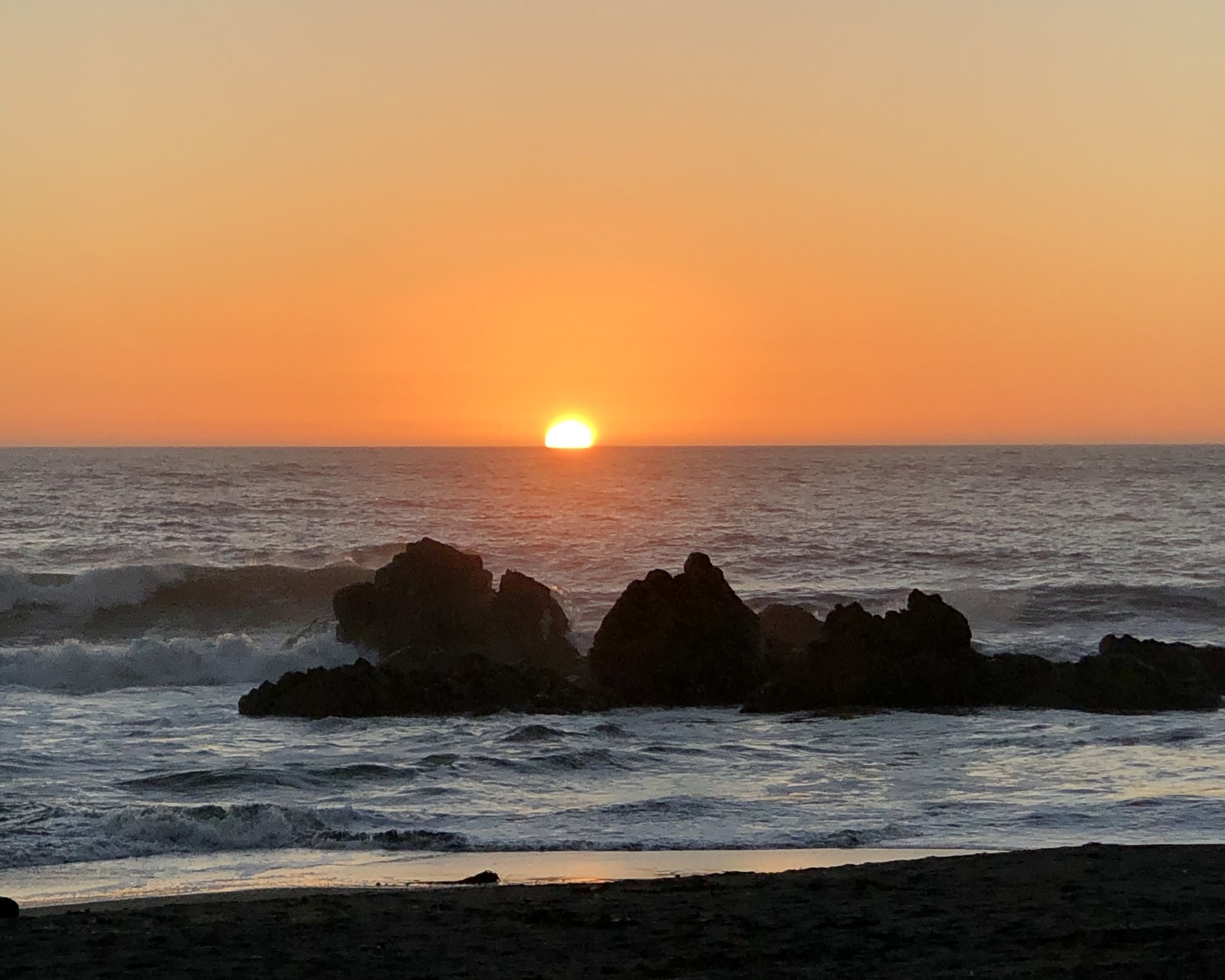
I arrived in Grayland on Sunday August 13th in the late afternoon after a long, sweltering, 5 hour drive through some gridlock traffic during the historic heatwave that hit the Pacific Northwest. There was some relief in the heat along the Pacific Ocean, but it was still in the 70’s when I arrived to my campsite. I enjoyed a nice stroll to the sandy beach and put my legs in the cool ocean water, which felt good after sitting in the van for so long. I had hoped that the campsites were close to the ocean, but it’s actually a good 10-15 walk to get to the ocean-front. I watched the sun set into a bright orange glaze as there were no clouds to light up the sky any further. For those who wonder about the name, the town of Grayland and the state park were named for Captain Robert Gray, an American sea captain who “discovered” all the harbors now named for him, including nearby Grays Harbor.

Did you know that you can drive onto many of the beaches along the Pacific Ocean in Southern Washington State? I discovered this last year when I was visiting Seaview on the Long Beach Peninsula. There were quite a few cars on Grayland Beach while I was there, which reminded me that there are vehicle-friendly beaches in the area. Make sure you deflate your tires a bit if you’re in a van, or that you have 4WD/AWD, plus it can’t hurt to carry GoTreads or other traction boards in case you get stuck. Be sure to follow the WDFW rules so you avoid razor clams and snowy plovers when driving onto beaches!

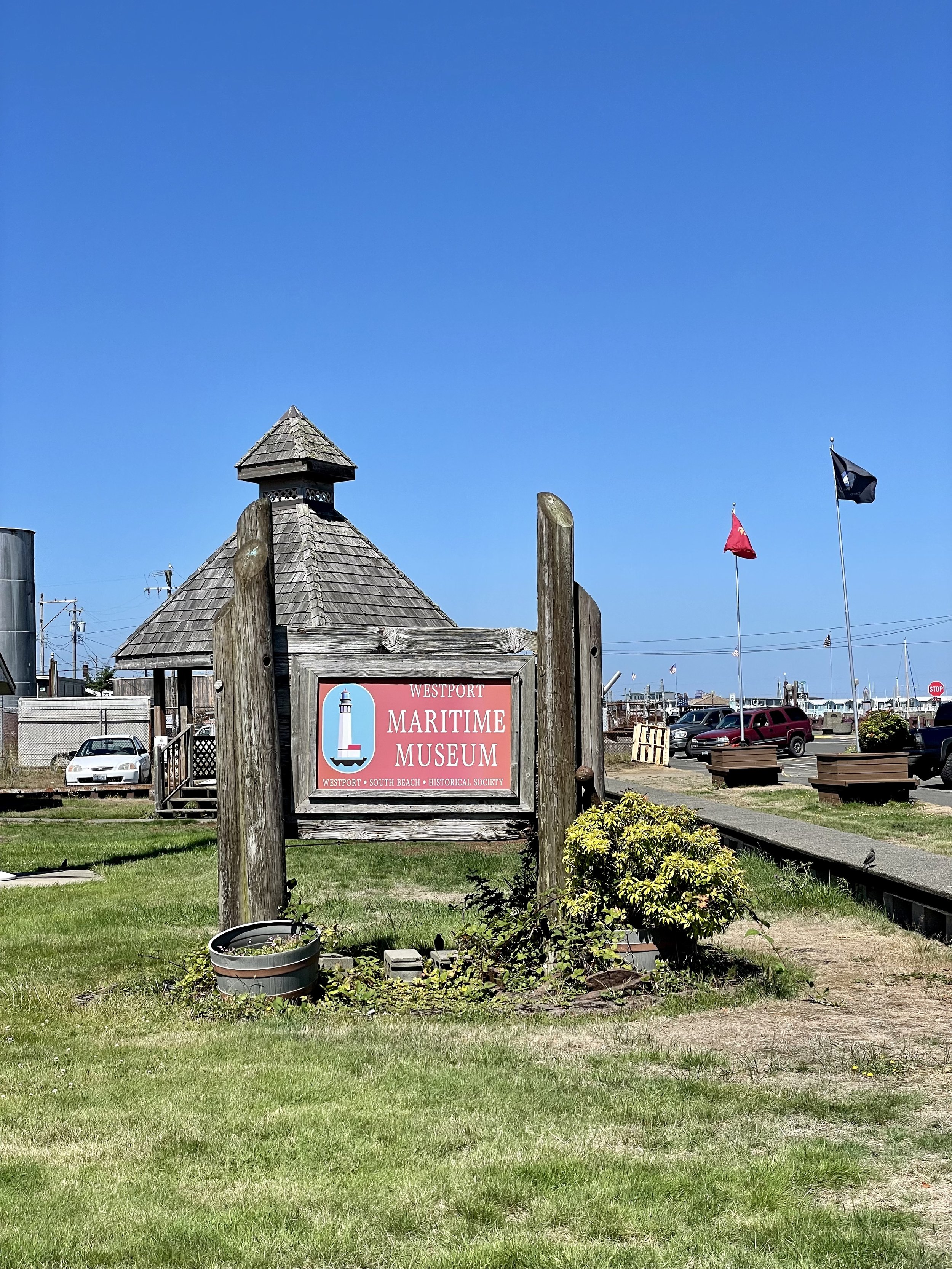
During my stay, I went to check out Westport, the surfing capital of Washington and a cozy seaside town. I checked out the Westport Maritime Museum located in the historic Coast Guard station building that was built in 1939 and showcases exhibits on the maritime history of the South Beach. I particularly enjoyed their outdoor natural history exhibit that features sea mammal skeletons, including a large gray whale, a blue whale skull, sea lion, and harbor porpoise. There’s also a scale-model of the former Coast Guard station and lots of historical exhibits of shipwrecks, rescue operations, and the whaling and fishing industries. The biggest highlight is the magnificent Destruction Island Lens which was installed in the lighthouse in 1891 on Destruction Island (north of Westport near Kalaloch) and operated until 1995.

After exploring the museum, I headed to the waterfront to have a bite to eat and ended up enjoying a delicious sandwich at Westhaven Wines, a specialty wine bar and bottle shop located dockside in Westport's Marina District. I also enjoyed a red wine tasting with my meal and ended up buying two lovely bottles, a 2020 David Finlayson Cab and a 2019 Powers Syrah. Then I headed to Westport Light State Park to explore Half Moon Bay and Westhaven Beach. After enjoying the beach time and walking on the cliffs, I headed by the Grays Harbor Lighthouse, which was sadly closed so I only got to take some photos. One thing I planned to do but forgot about was to climb up the Westport Viewing Tower to see the 360* view.

My friend Aimee Danielson joined me for the second half of my camping stay at Grayland Beach State Park and we had a blast visiting the International Mermaid Museum and Westport Winery, so stay tuned for that post coming soon! I also recommend reading Aimee’s blog about the seaside town of Westport as she’s explored this area many times and has some great tips about clam digging. She’s an avid blogger and has a lot of experience traveling around the PNW, so I recommend following her adventures, plus you can download a FREE e-book on Washington State Parks!

One final note — Aimee and I ate brunch at Blue Buoy and absolutely loved their Eggs Benedict! If you’re ever in the area, we both highly recommend this friendly, family-owned restaurant.

Comment

10 Comments

Going From A Bar Rat To A Vanlifer

When my parents died in 2013 and 2015, I realized that I had been wasting a lot of my life at work and drinking at bars. After two failed marriages, I spent my mid-thirties to mid-forties at bars a lot. Drinking was my coping mechanism, a way to get out of the house and be social, forget that I was actually unhappy. I went to the bars 3-6 nights a week, smoking cigarettes and drinking alcohol, bonding with various people (some acquaintances, some friends), many of which were lonely people like myself that were escaping their lives as well. I easily had 5+ drinks/shots each time I went out! It didn’t help that I decided to build a side business in music, booking shows at venues with alcohol. The benefits of doing business in that environment meant lots of free drinks, either the venue hooking me up or people buying them for me. One venue even let me drink free every time I went there, even when I didn’t have a show, and I took advantage of that. I still have a receipt from them that shows my whole tab for the year and then that amount “written off” to a zero balance — I’m pretty sure it was close to $3K! It’s not easy to admit to all this, it is definitely something that I justified to myself thinking I didn’t have a problem. Looking back, I know that this behavior led to many bad decisions, as well as weight gain. Between drinking at bars and shows, going to my day job in hi-tech (often hung over), and sitting on my couch watching tv, I didn’t really do much else. I led a sedentary life. To think that I could have explored all the beautiful areas around me and throughout California during those years is disappointing!

Losing my parents changed me, A LOT! I realized that life was short — I became very aware of our mortality and that one could easily die at any moment. I couldn’t keep going down the same path of destruction. It still took me a few years to fully get out of that cycle, but one thing that changed pretty quick in late 2013 was the amount of time I spent at bars drinking. I stopped being a “bar rat” and going out drinking in excess. That doesn’t mean I stopped drinking, but it was easily reduced by half. Instead of bars, I hosted people at my house, but not nearly as often as I was going to bars. I still sat around and watched tv a lot though, still not going out to explore and enjoy the surrounding nature areas. Then in 2016, I discovered vanlife through a guy I was dating that year. It changed my life forever!

When I first met Jesse and he told me he lived in his van, I thought something was wrong with him — who would want to live in a van intentionally?!? He explained to me that he didn’t want to pay the exorbitant monthly rent in the Bay Area and that by living in the van, he saved 80% of his paycheck, which he put into his retirement savings. He also showed me how the transient lifestyle meant seeing all the beautiful areas around, spending the night by the ocean or in the forest, taking trips on the weekend to some place new. I realized at that moment that there were so many wonderful areas within an hour or two of where I lived that I never visited in the 25+ years I lived there! He also took me to Oregon and Washington on a week long road trip, which really opened my eyes as I had never explored these two beautiful neighboring states.

Even though Jesse and I didn’t work out as a couple, he left an impact on my life. In our 8 months together, I learned a lot from him — how to find overnight spots, what apps/websites to use, what to do and not do, and other valuable tips. Jesse also encouraged me to travel solo since I was convinced that traveling with a partner or friend was the only way I could travel. I knew that I wanted to continue this lifestyle, so I started researching vans and RV’s to see what I could afford. About a month and a half after our breakup, I bought myself a 20 ft. Thor Majestic 19G Mini-Class C RV for $25K. I started exploring California and learned that traveling by myself with my cat Maverick was actually quite fun.

Being that I’m super social, I set up my road trips with stops where I could visit various friends along the way, plus I went to a lot of local meetups with vanlife enthusiasts and nomads to make friends and learn from them. I also learned about bigger vanlife gatherings in Oregon and Southern California, which I started to attend to meet like-minded individuals and fully immerse myself in this wonderful community. My first Descend on Bend in 2018 was so impactful, spending three days in the Oregon high desert with 1000 other part-time and full-time vandwellers, enjoying food, drinks, activities, music, and bonfires together! Then in January 2019, I went to San Diego to a monthly meetup on Fiesta Island, where I met the ladies that started the Sēkr app and continued to grow my vanlife connections. Some of the people I met at these events have become close friends and some of the nicest people I have met in my life!

In 2019, I decided to sell my RV as I didn’t really love driving it. The over-cab bed was small and bit claustrophobic, the vehicle wasn’t very aerodynamic and shook a lot while driving, and the gas mileage was terrible at around 10 mpg. Seeing so many great custom build vans at all the events I went to and hearing how much easier they were to drive, I decided that I wanted a van of my own, especially knowing what I needed and didn’t need in the small space from the RV. I researched the various types of vans, as well as all the van builders I could find on the West Coast, and after 6 months of manifesting the van of my dreams, I found a 2019 Mercedes Benz Sprinter cargo van with all specs I wanted and had it custom built out in late 2019/early 2020. That van was ready for pick up in early April 2020, right after COVID-19 hit. I encourage you to read my van build story for more details on that!

In the last 6.5 years, I have traveled over 40K miles solo with my cat Maverick. I’ve been to 7 states, mostly on the West Coast, and continue to attend as many vanlife gatherings as I can. I love the freedom of traveling in my home-on-wheels, being able to spend the night in beautiful places, and exploring nature! Instead of sitting at home watching tv or going to a bar drinking, I drive to new places, learn about the history, and walk around to see as much as possible. I hike trails to waterfails, through old growth forests, and along oceanside cliffs, I take dips in watering holes, hot springs, and rivers, and I swim in lakes, bays, and ocean waters. I enjoy parks, beaches, museums, and local restaurants and shops. I meet people everywhere I go and have wonderful conversations with them. I feel like I’ve learned so much, met so many interesting humans, and overall I’m leading a much healthier lifestyle. What a difference a decade can make once you make better choices of how to spend your time! I have a lot of fond memories of my bar days — I’ve hosted and managed some talented bands/artists and made some great friends in the process — but I don’t miss the excessive drinking and side effects of that lifestyle. I don’t believe in having regrets since all the decisions in my life have shaped the person I am today (whom I’m very happy with), but I can tell you that the quality of life I have now is dramatically better, and sometimes I wish I had discovered it sooner. I know my parents in heaven approve of the changes I made and they walk with me every day, with every step, in this amazing life I have!

10 Comments

Comment

The Trip That Changed My Life

As many of you know, I decided to pack up my life in California back in Fall of 2020 and move to the Pacific Northwest. I had been wanting to move out of California for awhile, mainly because I didn’t love the heat and traffic, but I was so established there between friendships, work, and my house that moving seemed like a lot of work and a little scary. I always heard that once you move out of California, it’s hard to move back, especially if you sell your house. Then in August 2020, Silicon Valley was hit with a huge dry lightning storm that caused some of the biggest fires in California history. For two weeks we had an orange apocalyptic sky with bad AQI that ended up affecting the whole West Coast, with smoke moving across the whole country! Between the fires and the increased amount of summer days over 100*F, I was over the heat and smoke, so I went on a 5 week road trip to Oregon and Washington to see where I would want to live.

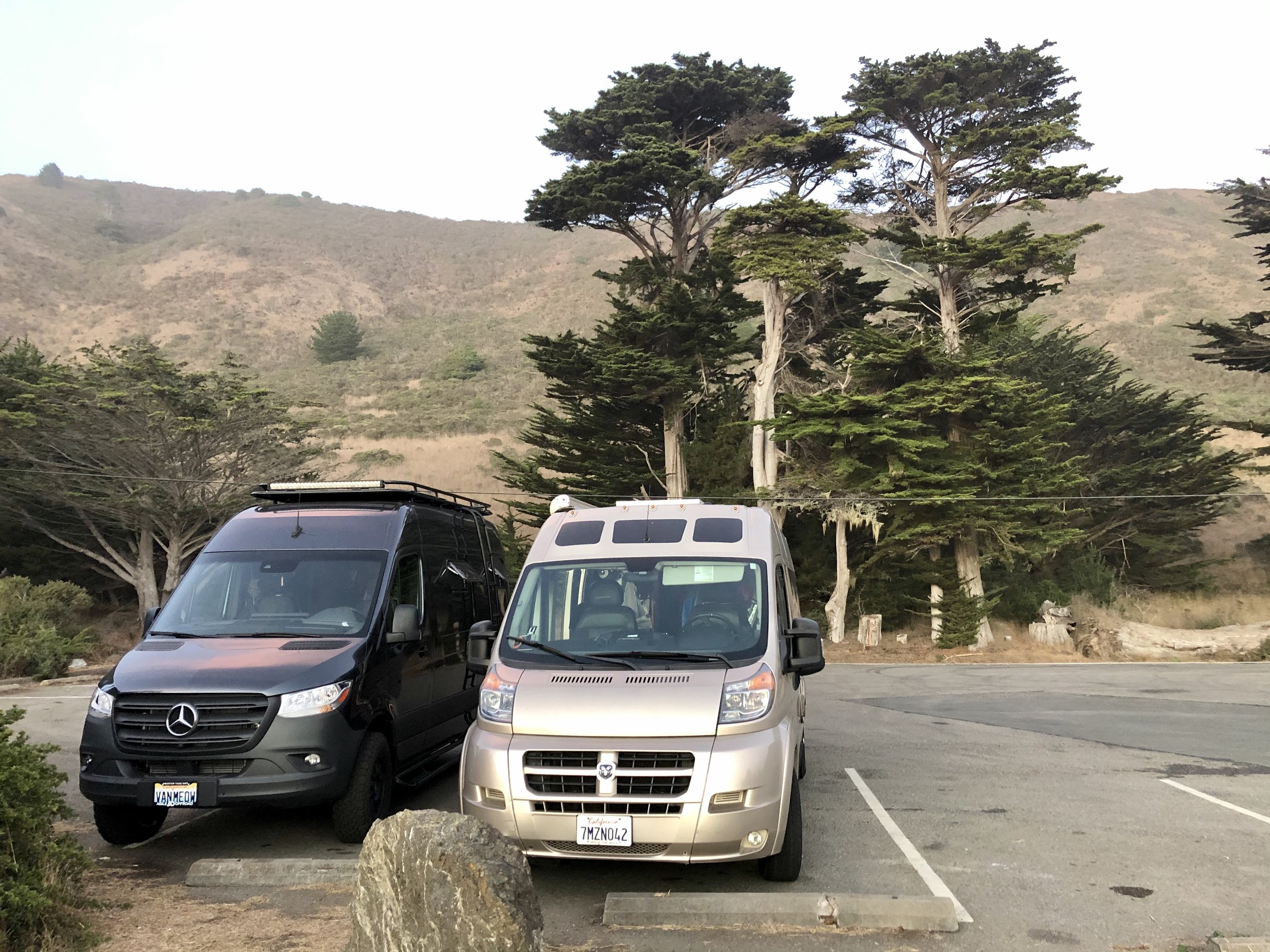
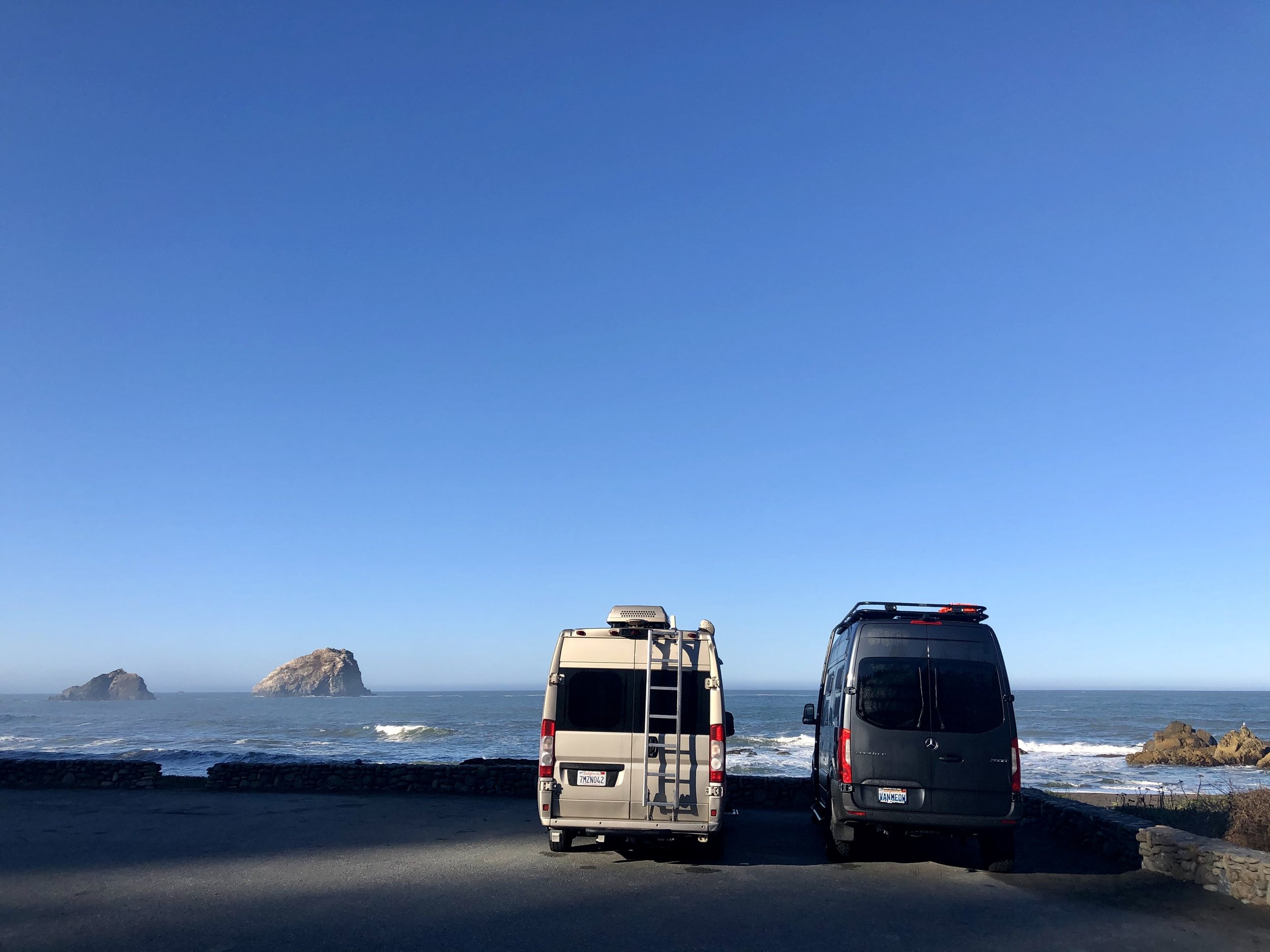
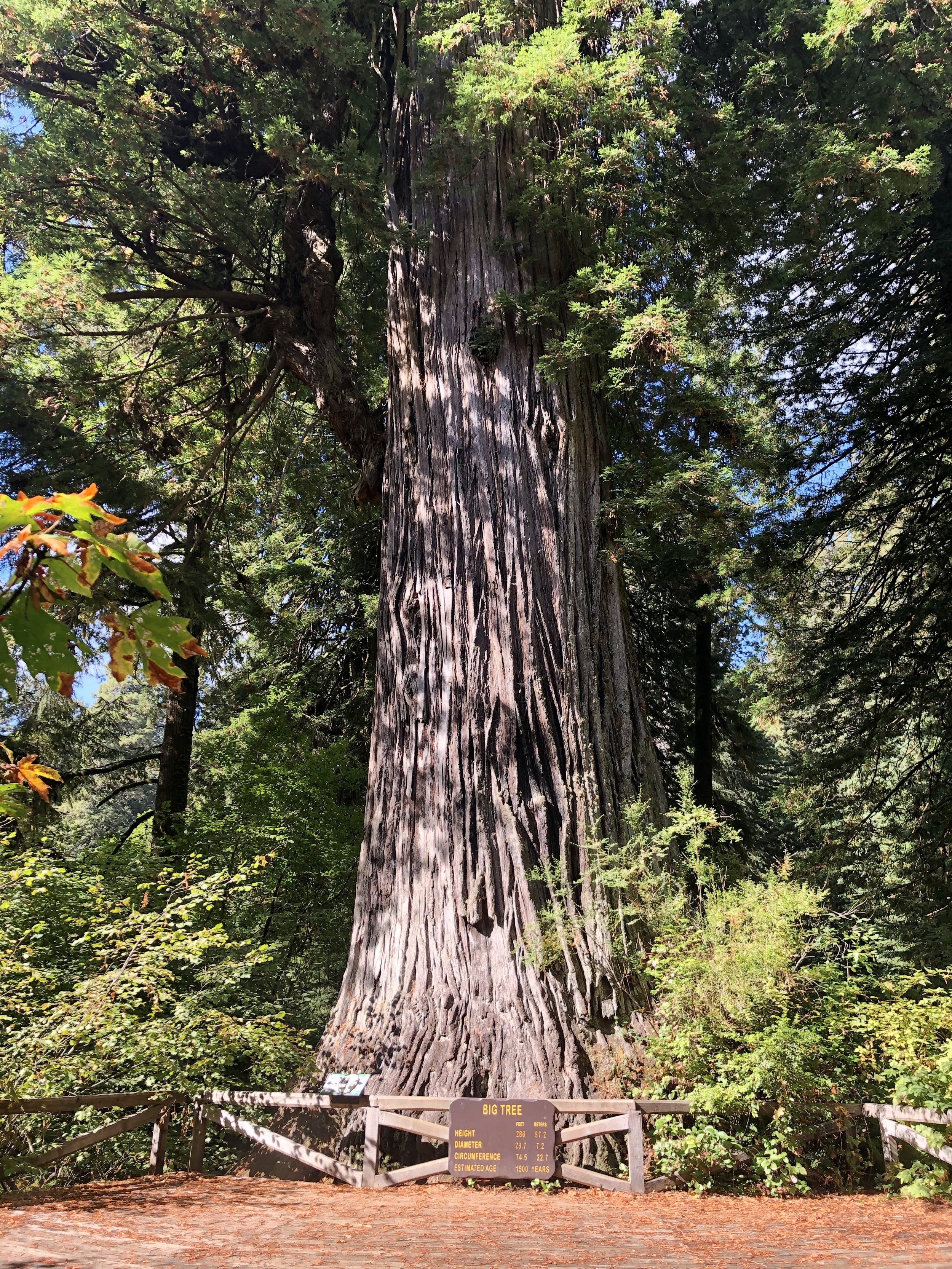
For some reason, I never made it to the PNW until 2016, despite living in California most of my life. The guy I was dating that year took me on a vanlife road trip to Oregon and Washington, which is when I discovered how much I liked those two states. I kept visiting and exploring them over the next few years in my RV and enjoying my time there, making them viable choices of where to live next. I also considered moving to the Central Coast of California, somewhere near Pismo Beach. I went on this month-long road trip with another female vanlifer named Cory whom I met at a few vanlife gatherings over the years. She also wanted to leave the Bay Area and move to the PNW. We started the journey on September 24th and worked out way north to Fort Braggg, through the various Redwoods in Northern California, and even stopped at Moonstone Beach.

I originally figured I’d find the perfect beach town in Oregon as I’ve always wanted to live by water. Brookings was a front runner prior to the trip, mainly due to being right at the California border and having a lot of sunny days compared to other oceanside towns. One concern I had though was health care in these small beach towns as they don’t have the same amenities as big cities, which aren’t exactly that close. I did enjoy my time in Harbor and Brookings, but there was a heatwave hitting California and Southern Oregon with 90+* temps that made me reconsider the idea of moving to a place that was still quite hot at the beginning of Fall. I also heard from some newer locals I met who had moved there that finding a house was hard since not much inventory was available. One family had been looking for a year and still hadn’t found a house that was worthwhile. Cory and I decided to drive further north to get away from the heat and continue to see what towns were more favorable.

After a nice stint on the Oregon coast with stops in Bandon, Florence, Coos Bay, Yachats, Newport, Tillamook, Manzanita (another town that topped my list), and Astoria, we worked out way inland along the Columbia River Gorge on the Washington side to Skamokawa for riverside camping, and then even further inland to Graham where Cory had some friends that hosted us with a gorgeous view of Mount Rainier. From there we headed to Alki Beach in West Seattle, but the weather turned gray and misty, plus we spent a restless night along the waterfront due to traffic and noise. Cory needed to get her Roadtrek serviced near Seattle for a few days, so we parted ways and I headed north to Bellingham to visit a friend from high school who always spoke very highly of this small city near the Canadian border.

What I didn’t realize at the time was how this part of the trip would change my life forever. I literally FELL IN LOVE WITH BELLINGHAM! I had the best four days exploring this idyllic bayside city that feels like a big town. There are no high rise buildings, no traffic, lots of parks, waterfront trails, a beautiful waterfall, and the huge 13 miles long Lake Whatcom only 10 minutes from downtown. The weather was sunny and between the bay, the lake, and the mountains, I just felt like I was home. Bellingham has a European feel to it and there are a lot of outdoor activities to enjoy without having to drive far. It’s a haven for hiking, kayaking, paddle-boarding, boating, fishing, mountain biking, and even skiing and snowboarding at Mount Baker. I also took a day trip to Anacortes, which is a charming island town close to the San Juan Islands, and Deception Pass State Park. I hired my friend’s real estate agent with hopes of finding a house with lake or sunset view in the Bellingham vicinity before I left.

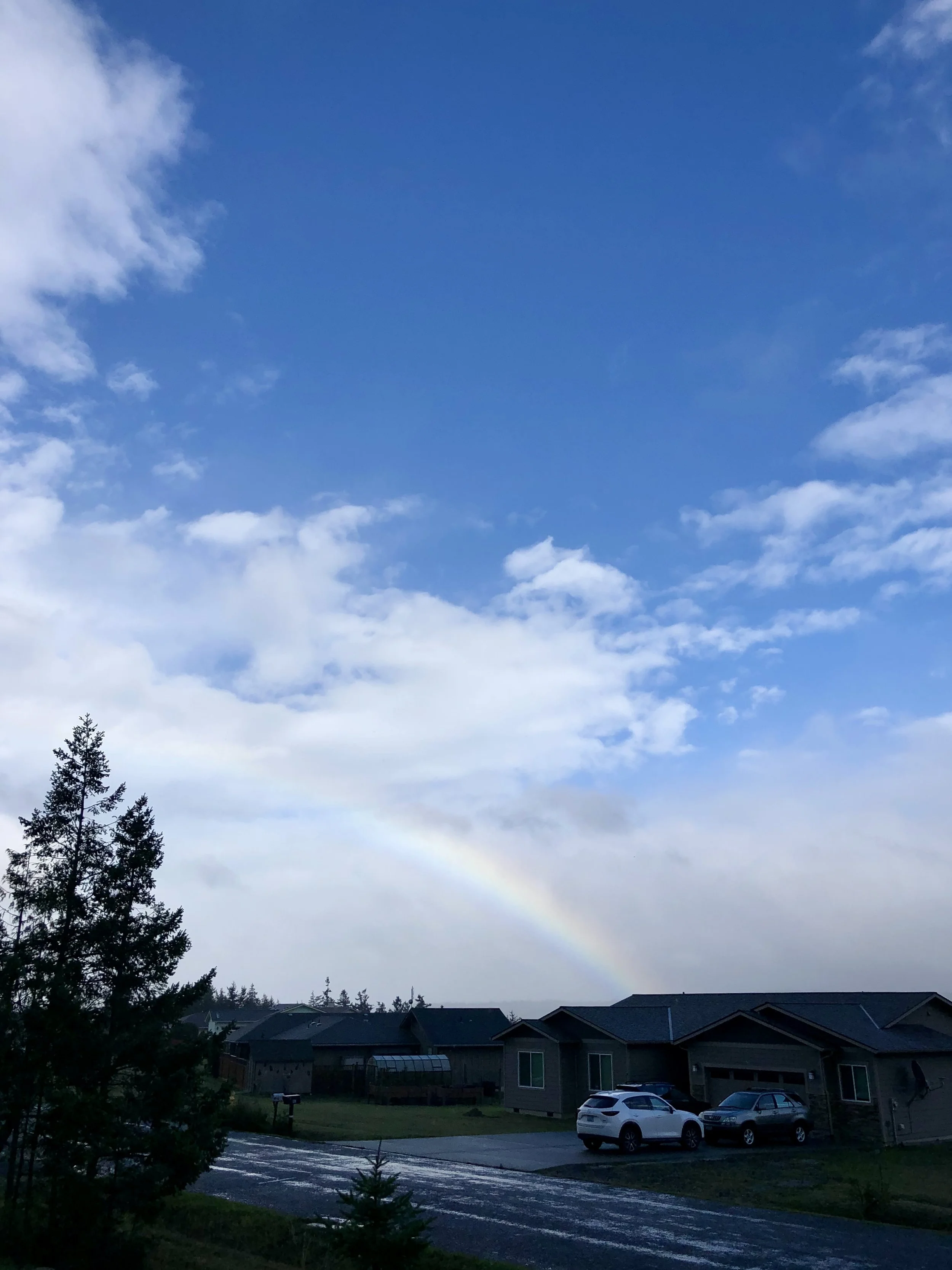
After my incredible days in Bellingham, Cory and I met up again and headed south to Bay View State Park for some camping, meeting up with another vanlifer whom I met on Instagram named Cameron. Then after a stop at Snoqualmie Falls, the three of us headed to the Olympic Peninsula to spend a few days in Sequim, known for its lavender, game farm, and lots of water and mountain views. Sequim is a small town of 30K people (if you count the greater surrounding area) and is often referred to as the “Blue Hole” because it is in the rain shadow of the Olympic Mountains and stays sunnier than most of the Puget Sound area. There are still some occasional drizzles of rain, but those led to seeing lots of rainbows!! Cory and I met with a real estate agent and got familiar with the different regions of Sequim and I even found a house on sale that appealed to me. I made an offer on it, but was beaten by a much higher cash offer. Turns out one of the founders of Descend on Bend lives in Sequim, so I spent one night at their place enjoying the sunset view and bonding with the family. My days in Sequim were quite lovely, making it my second choice to move to.

Cameron, Cory, and I parted ways after Sequim. Cameron headed to spend time with a friend of his in Port Angeles, Cory headed to Oregon’s wine country, and I headed further west and then south on the Olympic Peninsula to explore Lake Crescent, Marymere Falls, and the Hoh Rainforest, all of which are located in the Olympic National Park. It was a wet and rainy few days, therefore, I headed back inland to McMinnville, Oregon, for some wine tasting in sunny warm temps. From there, I worked my way south with a stop in Corvallis for cider tasting, and then west to Highway 101 to take the scenic, mostly ocean-front drive south with quite a few stops in the Samuel H Boardman Scenic Corridor just north of Brookings. The moment I crossed the border and saw the “Welcome to California” sign, my heart sank, which is when I knew the time for me to move was official — I no longer wanted to live in California.

I got home on October 30, 2020, and packed up the 10% of my belongings I wanted to keep in 2 weeks. I had an estate sale on November 21st. The following week I had friends and acquaintances take whatever they wanted from what was left, and then the weekend after Thanksgiving, I made a Craigslist post for people to grab whatever they wanted from the garage. I had very little left for donation and dump runs, and then my house was cleaned, staged, photographed, and went on the MLS on December 4th. I had so many offers the following day that I went under contract on the 5th. That’s how quick the process was, a little over a month and I no longer owned property in California! The crazy part was that I hadn’t found a house yet in Bellingham nor Sequim, so I started looking for a rental and found one just outside of Bellingham. Then the day after I closed escrow on my California house, this beautiful modern house near Lake Whatcom in Bellingham went on the market. It was everything I ever I wanted style wise, so I bid on it sight unseen, though my Bellingham friend did go look at it for me and gave me his approval. The sellers didn’t want a bidding war so they took my offer and I went under contract with a mid-February close. I was able to stay in the California house I just sold until January 21st, then I stayed at my friend’s ranch until I moved to Washington on February 1, 2021.

That Pacific Northwest vanlife trip was the best decision of my life. Many of my Bay Area friends didn’t understand my urge to pack up and move in such a short time frame, but for me it was the right decision. I just had a gut feeling that I needed to start over somewhere fresh with a healthier lifestyle. Was it a bold move with some risk involved? SURE! But I also knew that if by chance I didn’t love living in Bellingham, I could always move after two years and find another place. I also knew to trust my instincts and they told me that living in Washington was just what I needed. My instincts were right! Turns out I absolutely love where I live, that the Pacific Northwest climate, landscape, scenery, and lifestyle really suit me, and I’ve never looked back. Sometimes I even wish that I moved here when I was younger because I feel so at home now.

I always encourage everyone to FOLLOW YOUR DREAMS. Moving can be scary, especially when you’ve lived somewhere most of your life, but moving can also be SO REWARDING! I can honestly say I live a much healthier lifestyle, enjoying nature, exploring new places, camping, hiking, kayaking, spending time outdoors, all things I was not doing in California. The heat and the traffic kept me from exploring and made me lethargic. I can no longer imagine living in a big city. I finally live near water like I’ve always wanted, I even live in the forest. Plus I love that I can be completely immersed in nature feeling like I’m far from civilization within 5 minutes of my house. So if you’re reading this and you’ve been feeling the need to change your life, I encourage you to go for it, even if it seems scary or impossible. You are the the only person that can change your quality of life and make it better. JUST DO IT, take the plunge!

A quick closing note. Cory also ended up finding her retirement place on this caravanning trip. She moved to Florence, OR, about a year after I moved. She’s also super happy with her decision!

Comment

Comment

Vanlife Products That I Love

I know there’s a lot of vanlifers out there that promote products. Many do it because they rely on the kickbacks to earn money on the road. I fully respect and understand that and try to support as many of them as I can because it’s their livelihood and I want people to succeed. I also like to promote products that I believe in and use when I’m in the van on the road. Here are some of those products:


MoonShade — I didn’t want to be restricted with an expensive awning that was affixed to one side of the van, so when I heard that a San Francisco company came up with a more versatile and cheaper awning, I was stoked. I was one of the first buyers of the MoonShade and absolutely love it! It packs up small to the size of a yoga mat, fits in one of my back drawers in the van, and sets up fast and easy. Use code 'barbrocks' for $30 off! They keep growing their product line, so this is a great vanlife company to watch.


Quest Overland — I have the Sprinter blackout window covers for the front cab and back windows and they fit perfectly with strong magnets holding them up. They are well constructed in a neutral color, and last years and years; mine are from 2019 and they don’t show any wear and tear. The company also makes bug screens for the sliding door now, which install into the rubber gasket so they stay secure, though they sell out and aren’t always available. Use code “barbrocks5” to save 5% in their shop!

UPDATE: Hally & Ian the founders of Quest Overland sold the company in September 2023 and I heard the new owner was not fulfilling orders nor replying to emails, therefore, I sadly can no longer recommend this company to people unless the new owner gets his business affairs in order and customer service improves.


Ripplewear — I bought these easy to put up bug screens on eBay and am overall happy with them. They attach with magnets and stay up decently, though if you pull too hard, they do come down. If you don’t want to spend a lot of money on van screens, these are a good solution, plus they pack up small when you don’t need them. I only put mine up when I’m in an area with mosquitoes.


Kula Cloth — I love my Kula pee cloths and use them at home and in the van. Kula is an anti-microbial cloth made from advanced silver-infused textiles that saves the environment and is the perfect item for women that are into outdoor activities like hiking, mountaineering, camping, fishing, etc, as well as for people living the nomadic lifestyle. This well-designed reusable pee cloth wipes after squatting, attaches to backpacks with a snap, snaps closed after use, and keeps toilet paper from littering nature. I have a bidet at home, so I use it to avoid getting toilet paper fuzz on me, and I keep one in my purse for those occasions when public bathrooms don’t have anything to wipe with. Practice “leave no trace” and keep your genital area clean, all while using a practical, eco-friendly item with pretty art on it!


SandCloud — These towels dry quickly and fold up small, which is essential in a small space, plus they have some cool patterns/designs, and 10% of profits goes to marine conservation. They have a Disney collaboration now and have released Star Wars, Harry Potter, and Micky Mouse designs, and continually release other cool marine designs with various preservation organizations. For my home I own two sets of the Pantone bath bundle (in French Blue and Bluing), and the Mud Cloth bath bundle (in black). In addition, I have the Harmony, Sundown, Mandala, and Vista (zebra print) towels (some of these designs are no longer available), which I use for beach, lake or pool excursions. I also have the Cyperus kitchen towels bundle for the van since they match my interior colors so well.


Rumpl — I love their puffy blankets as they keep you super warm with cool designs, which are available in different types (original, nano, down), plus they have an indoor line (sherpa, hemp, wool), as well as towels, mats, and other gear. I own 4 puffy blankets them now and I have the Lake Tahoe Everywhere Towel, which is super soft! The company does limited edition artist collaborations (I own 2 of those) and they have a super cool National Parks collection, and even an NFL collection! I love how there’s a clip on the puffy so you can wear it outside to stay warm.


Amazon — I have a few different Amazon lists with products that I use and think are good. The lists are divided up into Vanlife Essentials, Van Build, Cat Products, Household Items, Sports & Fitness Gear, Good Books, Beauty Products, and Fashion. My favorite thing to promote for ladies living vanlife is the female urination device which fits perfectly between the legs so there’s no mess! I also have all the items from my van build that are available on Amazon up, as well as other practical items for vanlifers.


Sticker Mule — I love giving out my vanlife & cat stickers at gatherings and events, but not all stickers last in the elements. I highly recommend getting good quality vinyl ones that will last on the outside of a vehicle. These ones are made from thick and durable vinyl which protects the stickers from scratches, water and sunlight. Plus they regularly have a sticker deal where you can get 50 stickers for just $29, which is $0.58 a sticker! With my link you will get a $10 store credit!
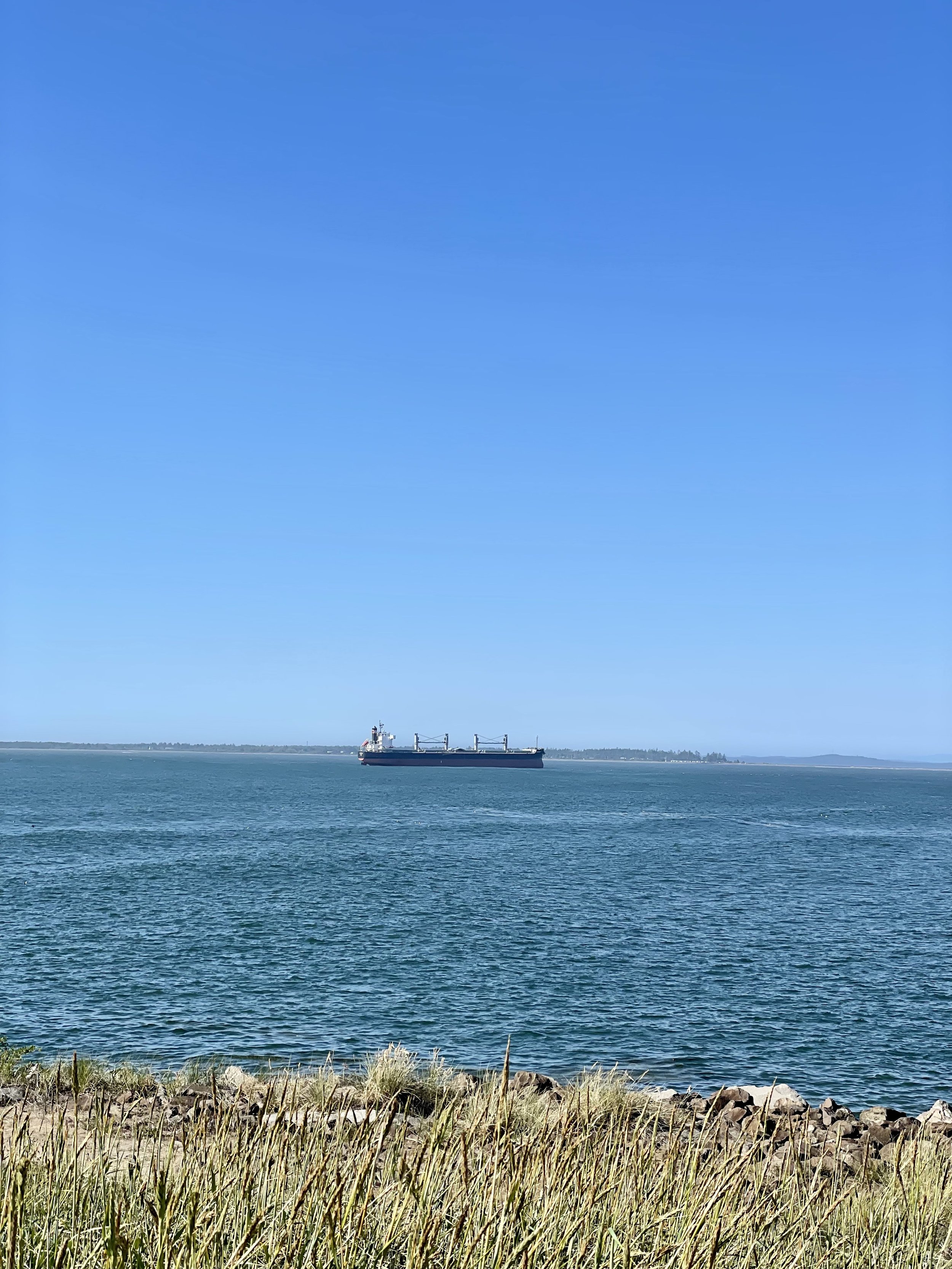

Curie — I’ve tried many natural deodorants out there but many don’t fully work for me because I sweat easily. I discovered this brand on Shark Tank and decided to try it after seeing the founder get the investors to smell her armpits after a hike and scoring a deal. Guess what? This clean, aluminum-free deodorant really works! Even after hours of salsa dancing, my armpits still smell good despite all the sweating. In addition to the deodorant, I also use the deodorant & body spray for a refreshing spritz, and the armpit detox mask for a deep cleaning when needed, which also works on your face if you have problem areas. I recommend getting the Pit Kit as a starter packet.


Paka — An amazing apparel line founded in Peru that makes all-purpose clothing for people who love the outdoors with alpaca fiber and other materials that are healthier for people and the planet. I personally love the Breathe Zip-up and The Hoodie, as well as the baselayers and socks. These garments keep you so warm and are so soft to the touch! Not only does this company ethically source the alpaca fibers, they employ Peruvian weavers and multiply their daily income by 8x. Some of the garments are even hand-signed by by the woman artisan who wove it!


Ka'Chava — I know there are many different protein shake options out there, but this is my favorite one (especially the chocolate flavor). Not only does it taste better than any other protein shake I’ve tried, it has so many great ingredients in it for full body nutrition. The optimal blend of superfoods, protein, essential vitamins, minerals, greens, probiotics, prebiotic fiber, adaptogens, antioxidants, omegas, MCTs, digestive enzymes. It is all plant-based, (no animal products), vegan, dairy free, gluten free, soy free, GMO free, preservative free, no artificial flavors, colors, nor sweeteners. Use my link to get $15 off your first purchase!

Comment

2 Comments

Vanlife Gatherings 2023

Vanlife & Overlanding Events 2023

January
Women's RTR — Jan 7-12 | Quartzite, AZ
Rubber Tramp Rendezvous (RTR) — Jan 13-20 | Quartzite, AZ
Xscapers Annual Bash — Jan 14-22 | Lake Havasu, AZ
Florida Suncoast Tiny Home Festival — Jan 21-22 | Pinellas Park, FL
Skooliepalooza — Jan 23-29 | Ehrenberg, AZ
Arizona Outdoor Adventure Fest — Jan 28-29 | Scottsdale, AZ

February
Escapar A La Baja — Feb 4-6 | Playa El Tecolote, Baja, Mexico
The Florida Vanlife Gathering — Feb 3-6 | Dade City, FL
Truck Camper Adventure Rally — Feb 9-12 | Quartzsite, AZ (SOLD OUT)
Project Van Life Summit — Feb 17-19 | Online Event
Skoolie Swarm — Feb 18-27 | Melrose, FL

March
Borrego Bonanza — Mar 3-5 | Borrego Springs, CA
TinyFest California — Mar 11-12 | San Diego, CA
A Roam Of Our Own — Mar 17-19 | La Quinta, CA (WOMXN ONLY)
Camper Expo — Mar 17-19 | Utrecht, Netherlands
Revel In Baja — Mar 19-23 | Baja, Mexico

April
Red Rock 4-Wheelers Easter Jeep Safari — Apr 1-9 | Moab, UT
CamperFest — Apr 6-10 | Chester, Chestershire, UK
Rendezvous — Apr 19-23 | Mt Bachelor, OR
Back To Baja With Flarespace — Apr 20-23 | Sea of Cortés, Baja, Mexico (CANCELED)
Moore Expo — Apr 21-22 | Springfield, MO
Weird Wild West — Apr 20-24 | Bisbee, AZ
Moab Magic — Apr 21-23 | Moab, UT
Revel Club Big Bend Backroads — Apr 23-26 & Apr 27-30 | Big Bend, TX (2 SESSIONS)
Georgia Tiny House Festival — Apr 27-28 | Madison, GA
Camper Van Week-End — Apr 28-30 | Angers-Brissac, France
Adventure Van Expo — Apr 29-30 | San Juan Capistrano, CA
Camp Quirky — Apr 28-May 1 | Kelmarsh Estate, Northamptonshire, UK

May
Adventure Van Expo — May 13-14 | Sonoma, CA
Overland Expo West — May 19-21 | Flagstaff, AZ
Descend on Pinnacles — May 26-29 | Pinnacles, CA

June
Small Home Expo — Jun 3-4 | Abbotsford, BC, Canada
Randi’s Adventures — Jun 2-4 | Munising, MI
Fort Desolation — Jun 8-10 | Torrey, UT
Wind River Rally — Jun 15-18 | Hudson, WY
Outdoor Adventure X — Jun 17-18 | Huntsville, UT
Vanlife Iceland Midsummer Edition — Jun 17-24 | Iceland (SOLD OUT)
Adventure Van Expo — Jun 18-19 | Hood River, OR
Rose Fest — Jun 23-25 | Salida, CO
Buena Vista Brouhaha — Jun 23-25 | Buena Vista, CO
The Bus Fair — Jun 23-25 | Oakridge, OR
FWC Owner’s Rally & Campout — Jun 23-25 | Grass Valley, CA
Colorado Tiny House Festival — Jun 24-25 | Brighton, CO
Georgia Tiny Home Festival — Jun 24-25 | Madison, GA

July
50th National Truck-In — Jul 5-9 | Sterling, CO
Camper Jam — Jul 7-9 | Weston Park, Shropshire, UK
Revel Club Wings & Wheels Alaska — Jul 7-9 | Alaska
Overland Expo PNW — Jul 7-9 | Bend (Redmond), OR
Adventure Van Expo — Jul 8-9 | Evergreen, CO
People's Tiny House Festival — Jul 16-17 | Loveland, CO
Holy Toledo — Jul 20-23 | Toledo, OR
Black Nomads Beach Weekend & Campout — Jul 23-25 | Georgetown, SC
Adventure Van Expo — Jul 29-30 | Topsfield, MA
Open Roads — No Event in 2023 | McCall, ID (Returning 2024)

August
Skoolie U.P. — Jul 31-Aug 7 | Upper Peninsula Michigan
Revel Club 4X4 Van Training — Aug 10-11 | Ellenville, NY (Session 1)
Vanlife Iceland August #1 — Aug 12-19 | Iceland
Vanlife Iceland Lofoten #1 — Aug 12-19 | Lofoten, Iceland (SOLD OUT)
Northwest MogFest — Aug 17-20 | Sheridan OR
Vanlife Iceland August #2 — Aug 20-27 | Iceland
Vanlife Iceland Lofoten #2— Aug 20-27 | Lofoten, Iceland
Overland Expo Mtn West — Aug 25-27 | Loveland, CO
Leadville Lollygag — Aug 25-27 | Leadville, CO

September
Descend on Bend — Sep 1-4 | Bend, OR
Revel Club 4X4 Van Training — Sep 9-10 | Ellenville, NY (Session 2)
Black Nomads Hammock Hang — Sep 9-11 | Villa Rica, GA
VanWILD — Sep 14-17 | Montrose, CO
Keweenaw Overland Adventure Retreat (KOAR) — Sep 14-17 | Copper Harbor, MI
United Tiny House Off-Grid Workshop Camp — Sep 15-17 | Eatonton, GA
Project Van Life Summit — Sep 15-17 | Online Event
Adventure Van Expo — Sep 16-17 | Palisades Tahoe, CA
Vanlife Iceland Northern Lights #1 — Sep 16-23 | Iceland (SOLD OUT)
Vanquinox — Sep 21-24 | Grandjean, ID
Northwest Nomads — Sep 21-25 | Fort Rock, OR
Vanlife Iceland Northern Lights #2— Sep 24-Oct 1 | Iceland
Big Iron Overland Rally — Sep 29-30 | West Mineral, KS
Camp Carpe Diem — Sep 28-Oct 1 | Kalispell, MT
Adventure Van Expo — Sep 30-Oct 1 | Bend, OR
Midwest Vanlife — Sep 23-26 | Makanda, IL
Revel Club Rocky Mountain Meetup — Sep 28-Oct 1 | Estes Park, CO

October
Overland Expo East — Oct 4-6 | Arrington, VA
The Pilgrimage — Oct 3-6 | South Royalton, VT
Skooliepalooza — Oct 5-10 | Moab, UT
Vanlife Australia — Oct 6-8 | Bundjalung Region, Gold Coast, Australia
Adventure Van Expo — Oct 7-8 | Chattanooga, TN
Moonlanding — Oct 12-15 | Sky View, NM
Ring of Fire — Oct 14 | Valley of the Gods, UT
Adventure Van Expo — Oct 14-15 | Big Bear, CA
Nomadic Creatives — Oct 19-22 | Northwest, AZ
VanFest USA — Oct 27-29 | Hurricane, UT
C.H.A.S.M.Fest — Oct 27-30 | Lake Havasu City, AZ

November
Vanarky In The Ozarks — No Event in 2023 | Ponca, Arkansas (Returning 2024)
Florida Tiny House Festival — Nov 18-19 | Gainesville, FL
Revel Club Northeast Off-Road Adventure — Nov 19-20 | Ellenville, NY

December
TinyFest Southwest — No Event in 2023 — Phoenix, AZ (Returning 2024)

Other
Sēkr App — Community Based Events
Good Vibe Collective — Various Events Throughout The Year
Seattle Vanlife Meetup — Monthly Meetup
Xscapers — Yearly Events For Members
She Explores — Women On The Road Gathering
Home On Wheels Alliance — Regular Caravans
Wandering Footprint — Date Pending | Saanichton, BC

If you know of any events that aren’t listed, please leave a comment with link so I can add it!

2 Comments

Comment

Vanlife Gatherings 2022

Vanlife & Overlanding Events 2022

January
Rubber Tramp Rendezvous (RTR) — Jan 14-23 | Quartzite, AZ
Skooliepalooza — Jan 21-31 | Parker, AZ
Florida Suncoast Tiny Home Festival — Jan 29-30 | Pinellas Park, FL

February
Escapar A La Baja — Feb 2-4 | Playa El Tecolote, Baja, Mexico
Truck Camper Adventure Rally — Feb 9-12 | Quartzite, AZ
Skoolie Swarm — Feb 19-28 | Melrose, FL

March
Camper Expo — March 18-20 | Utrecht, Netherlands
TinyFest California — March 12-13 | San Diego, CA
Buena Vantura — March 24-26 | Ventura, CA

April
Moore Expo — April 8-10 | Springfield, MO
Red Rock 4-Wheelers Easter Jeep Safari — April 9-17 | Moab, UT
CamperFest — April 14-18 | Chester, Chestershire, UK
Rendezvous — April 20-24 | Mt Bachelor, OR (SOLD OUT)
Back To Baja With Flarespace — April 21-24 | Laguna del Diablo, Baja, Mexico
Weird Wild West — April 22-24 | Bisbee, AZ
Southern Xpeditions Overland Challenge — April 29-May 1 | Uwharrie, NC
Camper Van Week-End — April 29-May 1 | Angers-Brissac, France
Adventure Van Expo SoCal — April 30-May 1 | San Juan Capistrano, CA
Georgia Tiny Home Festival — April 30-May 1 | Macon, GA

May
Camp Quirky — May 13-15 | Kelmarsh, Northamptonshire, UK
Overland Expo West — May 20-22 | Flagstaff, AZ
Descend on Lost Sierra — May 20-23 | Portola, CA
Vanlife Iceland Spring Edition — May 25-29 | Iceland

June
Black Nomads Meetup — June 3-6 | Wrightsville, GA
Adventure Van Expo NorCal — June 4-5 | Placerville, CA
Small Home Expo — June 4-5 | Abbotsford, BC, Canada
FWC Owner’s Rally & Campout — June 10-12 | Lake Tahoe, CA
Vanlife Iceland Midsummer Edition — June 17-24 | Iceland
Summer Solstice Van Camp — June 17-19 | Mt Shasta, CA
Tennessee Tiny Home Music Festival — June 18-19 | Nashville, TN
Adventure Van Expo Hood River — June 25-26 | Hood River, OR
Wind River Rally — June 23-26 | Hudson, WY

July
Camper Jam — July 1-3 | Weston Park, Shropshire, UK
Overland Expo PNW — July 8-10 | Bend (Redmond), OR
Holy Toledo — July 15-18 | Oregon Coast
Open Roads — July 15-18 | McCall, ID
People's Tiny House Festival — July 16-17 | Loveland, CO
Adventure Van Expo CO — July 16-17 | Eagle, CO
49th National Truck-In — July 20-24 | Old Washington, OH
Van Pride Meetup — July 29-31 | Western OR

August
Skoolie U.P. — Aug 1-8 | Upper Peninsula Michigan
Fort Desolation — Aug 12-14 | Torrey, UT
Northwest MogFest — Aug 18-21 | Sheridan OR
Vanlife Iceland August Edition — Aug 20-27 | Iceland
Overland Expo Mtn West — Aug 26-28 | Loveland, CO
Descend on Bend — Aug 26-29 | Bend, OR

September
Adventure Van Expo Bend — Sep 3-4 | Bend (Redmond Expo), OR
TinyFest California — Sep 10-11 | San Jose, CA
Keweenaw Overland Adventure Retreat (KOAR) — Sep 15-18 | Copper Harbor, MI
Adventure Van Expo LT — Sep 17-18 | Lake Tahoe, CA
VanFest USA — Sep 22-24 | Hurricane, UT
Vanquinox — Sep 22-25 | Grandjean, ID
Northwest Nomads — Sep 22-26 | Fort Rock, OR
Revel Van Rally — Sep 29-Oct 1 | Moab, UT

October
Adventure Van Expo Chatt — Oct 1-2 | Chattanooga, TN
Moonlanding — Oct 6-10 | Sky View, NM
Red Rock & Roll — Oct 7-9 | Moab, UT
Overland Expo East — Oct 7-9 | Arrington, VA
Adventure Van Expo Big Bear — Oct 15-16 | Big Bear, CA
C.H.A.S.M.Fest — Oct 28-31 | Lake Havasu City, AZ

November
Vanarky In The Ozarks — Nov 3-6 | Ponca, Arkansas

December
TinyFest Southwest — Dec 3-4 — Phoenix, AZ

Monthly Meetups
Seattle Vanlife Meetup

Other
Sēkr App — Community Based Events
Home On Wheel Alliance — Regular Caravans
Off-Road Safety Academy — 4x4 Training Courses & Various Tours

To Be Announced
Vanstock Alaska
Good Vibe Collective
Asheville Van Life Rally
Midwest Vanlife
Kentucky Skoolie Fest
Wandering Footprint
Teton Valley Vanlife Gathering
Gutted
United Tiny House
Vanl
ife Diarie Australia
Women On The Road Gathering

If you know of any events that aren’t listed, please leave a comment with link so I can add it!

Comment

Comment

New Headliner Shelf From Carrve Custom Vans

While I was at Carrve Custom Vans for my custom hitch storage and bike rack solution, I saw the great work Ken did on a headliner shelf in his own van, so I asked him to make me one. Even though I’ve enjoyed the headroom in the cab part of my Sprinter, I didn’t have a great place to store my Quest Overland window covers, as well as blankets and pillows, and other bulky items that don’t fit in my cabinets well.

Ken did a great job building and installing the headliner shelf. Since my van build was already done with cabinets in place, it was a matter of lining everything up exactly so the headliner shelf fit in, which required a little extra work of removing the Sprinter visors, and in the end, everything lined up perfectly. The best part is that the black headliner shelf works well with my existing build color scheme, as well as the dark gray cab interior, and it doesn’t take away from the overall look and feel. Granted, I have hit my head a few times on it the first few weeks, but I’ve adapted now and find the extra storage super convenient and practical!

I highly recommend Carrve Custom Vans to anyone in the Northwestern Washington area. Ken and Ryan do great work, are super nice and accommodating, and they do quality work!

Also, if you need window covers for your cab, your back windows, and your side windows, please checkout Quest Overland. The quality of the window coverings is superb! I’ve owned mine for two years now and they are still in excellent shape, show no wear and tear, and will probably last me the life of the van. Use code barbrocks5 to save 5% on your order with them!

Comment

8 Comments

Custom Hitch Storage & Bike Rack Solution

After I bought my Aventon Pace 500 Step-Through eBike, I knew I needed a convenient bike rack to take it with me on my road trips. I looked at all the available bike racks online and didn’t really like any of the choices. The main reason was that most hitch racks are for 2 or 4 bikes, and since I am a solo female traveler, that would be waste of half the rack. I also wanted a storage box on the outside of my van and since my roof rack is pretty full with solar panels and my traction boards, I didn’t want to use up more of that space, plus carrying anything big and bulky up the side ladder is really difficult and inefficient. Therefore, I wanted a hitch storage solution via my hitch but I couldn’t find a solution that could work for both a bike rack and a box.


The two solutions I found that would somewhat work are the hinge racks that both Owl Vans and Aluminess offer, but there were a few downsides to these solutions:
1) The 270 hinges I have on my van that allow for the doors all the way to the side, would need to be removed and replaced with the 45 degree hinges.
2) The eBike is much heavier than a regular bike, so lifting it up overheard to sit on a box would be too difficult.
3) The largest box they offer does not have enough space for an inflatable kayak or SUP.
4) The weight of everything can take a toll on the hinges and doors of the van.
5) Both companies had a wait list for getting the solution installed and I wanted something sooner as I was planning to leave on a Baja road trip before Christmas.

Because I couldn’t find a solution that fit my needs and desires, I looked into a custom solution. I was referred to a local welder by Lenny’s Bike Shop, and Ian the welder started looking into options for me. He wasn’t sure he could make something as I requested, so he referred me to Ryan and Ken at Carrve Custom Vans, a great local van building shop. Ryan was super helpful and excited to come up with a solution for me. He also showed me first hand what the Owl Vans solution looked like since the vertical bike rack set up could have been an option, but I will still hesitant due to the small size of the storage box.

The solution Ryan and I came up with that fit my needs the best was as follows:
1) HitchSwing Arm from Wilco Offroad
2) Smooth Aluminum Barn Door Toolbox from Chandler Truck Accessories (18x18x48 size)
3) 1Up Bike Tray from Owl Vans

Ryan built a T-shaped support arm for under the toolbox that fits into the HitchSwing and mounted the 1Up Bike Tray on top of the toolbox. The end result is practical and just what I need to take extra gear on the road, with a bike rack that is at the right height for me to easy put my eBike on and take it off, and still allows me to open my back doors due to the hitchswing arm.

This custom solution cost me $1973.13 for parts, plus Ryan’s labor cost. I did buy the locking pins for both the HitchSwing Arm and the 1Up Bike Tray so I can lock everything to deter theft. I also bought the Sunlite Heavy Duty Bike Cover so that the elements don’t damage the eBike as much.

I’m curious if anyone else has a custom solution for their van, or what you think of mine, so please let me know!

If you ever need any van work done in the Pacific Northwest, or are looking for a great company to do your custom build in Northwest Washington, check out Carrve Custom Vans. Ryan and Ken do wonderful work and are super great to work with!

8 Comments

Comment

Guest Blog: Live the Dream, Become a Digital Nomad

Live the Dream: Become a Digital Nomad

Image credit: Pexels

Being self-employed and having the flexibility to work anywhere at any time is more achievable than ever. With a good Wi-Fi connection, a laptop, and a passport, your dreams of becoming a digital nomad are within reach.

You may wonder how these remote, self-employed folks break into the business. How can you go from a traditional work setting into this enviable style of self-employment? Here are some tips on how to make the transition, guides you through the process, and helps you land your first client.

Getting Established

First things first: you’ll need to choose what type of structure you’ll be operating as. You also may choose to run your operation as a DBA (“doing business as”), which is beneficial as part of your marketing and branding strategy. A DBA name is essentially a pseudonym for your registered, legal business name. Many business owners use it to avoid using their own surname (if the business entity includes their name) or, for corporations, an assumed name makes expansion easier, as it’s not necessary to create a completely new corporation.

Once you’re up and running as a legal entity, as a digital nomad you’ll need to build a ubiquitous online presence. This requires a solid understanding of the skills you can offer and the ability to convey those services to potential clients. Expert-Market notes that branding is an important part of the process of establishing your online business. It is an opportunity to show the world what you can offer and how it differs from what every other freelancer provides.

Freelance work can be unpredictable, so it is important to establish your business in a way that affords you multiple income streams. This may mean that, rather than offering one service, you diversify the skills within your wheelhouse. Start to establish yourself with a few regular freelance clients by offering your services for less or even for free, then take on more paid work as you build a reputation.

You may even consider being a “one-stop shop” for your clients, offering more than just one service. For instance, if you’re a freelance writer producing primarily web content, branch out and offer website hosting and design services. Assuming you’re not proficient in these additional areas, collaborate with others who are, bringing them under your business’s operational umbrella.

Staying Afloat

As a beginner freelancer, you are bobbing around in a rubber raft in a sea crowded with other freelancers — some in yachts, others in canoes. Starting out in your raft, it may feel as though you could sink at any moment or get tossed overboard. You can work your way from the raft into a schooner over time with some hustle and perseverance. To stay afloat as you begin freelancing, consider reducing unnecessary expenses such as subscriptions, reduce your entertainment budget, and consider cooking meals at home rather than dining out.

Amp up your social media presence to get the word out about your availability — these free marketing opportunities are priceless. You may also be able to access funds to help support yourself as a self-employed person impacted by the pandemic. Freelance unions offer access to affordable insurance benefits and advocacy resources, according to MoneyMiniBlog. As a digital nomad, you can opt to live in a location that offers a lower cost of living, which can save you a ton of money.

Staying on budget is key, especially to those who hope to support loved ones back home. Many people immigrate to the US and start their freelance journey with the intention of helping those left behind. This can be critical to populations like Brazilian immigrants — a group that has grown by leaps and bounds in recent years. Using fast and secure wire transfers is a smart way to ensure funds are received in the homeland. Those sending remittances should also consider whether the service they hire guarantees funds will be received within a certain time frame.

Survival on the Move

A crucial aspect of survival as a digital nomad is tech-friendly rental space to conduct business. As you investigate rentals in varying locations, first ask about high-speed internet and Wi-Fi access. You may be able to negotiate rental fees by bartering services such as maintenance or, better yet, offering your freelance skills to boost their rental business.

You are likely to have a fair amount of travel expenses as a digital nomad, but these can be reduced through business deductions and by selecting reduced-cost airfare. As a freelancer, you are available to travel during varying times of the year and at any hour of the day or night, which means cheaper airfare. Also consider rideshare services and even traveling by train as you make your way to new destinations. With these ideas in mind, you’ll be living the dream in no time!

Big thanks to Lance Cody-Valdez of Free-Lance-Now for this great guest blog!

Comment

1 Comment

Why I Choose MoonShade Portable Awning

When I was having my Sprinter van built out, I had to decide whether to get a permanent awning installed. I had one on my previous RV but I hated that I was limited to shade on one side of the van. I decided to hold off on one and was stoked to hear about MoonShade by Moon Fabrications in early 2020 right before I went to pick up my finished van. I got in contact with this brand new company right away and bought one. What I love about MoonShade is that it’s versatile. You can attach it to either side, as well as the back, and you have the option of width or length ways depending on the sun and your needs. It fits on vans, cars, truck campers, overlanding vehicles, fences, and any sturdy structure, making it great for road trips, camping, hunting, and fishing. MoonShade covers a 9’x7’ site, weighs 8 lbs., packs down to about the size of a yoga mat, protects you from the sun during the day, and provides reflective illumination at night.

There are a variety of ways to attach the MoonShade to your van, including suction cups and magnets, but I thought it would be even cooler and sturdier to attach it to my roof rack bar, so my handyman buddy figured out a great solution using stage can lighting clamps which I attach to the roof rack and then attach the MoonShade to the hook in the clamps. I’m really happy with the functionality of this setup and by having it so high up, I can just take the outside legs off when it gets super windy and have the MoonShade tied down against the side of my van until the wind dies down. It does handle wind quite well as long as you anchor the poles and shade with two guylines on each side.

UPDATE: I have changed how I attach the MoonShade to my van since my original solution. I now have two short paracord rope loops that I permanently attached to my roof rack, so all I need to do is clip the hooks into those loops.

I lowered the MoonShade poles here due to high winds in OR high desert

If you’re looking for a portable awning that is decently priced and versatile, I highly recommend MoonShade! Since I’m a brand ambassador for them, if you use my referral link and coupon code BARBROCKS, you can save $30! I’m also happy to answer any questions you may have about the awning and how it works!

UPDATE: MoonShade released a new XL version in the summer of 2023, which provides 12’x9’ of coverage against sun and weather, but still packs down tight and weighs under 13 lbs., making breakdown and storage a breeze. I’m waiting to get mine so I can enjoy almost double the shade!

1 Comment

2 Comments

My Gray Tank Valve Failure

BrokenValve.jpg

In January 2021, my gray tank valve stopped working. This was quite disappointing since I’ve only had my van for 10 months and it had less than 8K miles on it. Luckily the valve was stuck in the open position, which meant my gray tank would still drain, so I decided to wait until I could address it at a later time.

As luck would have it, I met Bill Franz from Franz Customs and he was able to take care of this issue for me in May 2021. I would like to thank Bill for the following detailed description of why my gray tank valve failed and what he installed instead, which is a much better solution. I am posting this directly from the email he sent me with some minor grammatical fixes, so the rest of this post is his expert analysis, which I hope helps others who are installing a gray tank valve do it the proper way with the right kind of valve.


I do not use Solenoid valves on mobile water systems for 3 main reasons:
1) Solenoid valves will eventually have operational problems if debris/sediments are in the water.
2) Electric solenoid valves will have a run time limit (duty cycle) because they use a coil. Coils will generate heat the longer they are energized (valve open in your case).
3) They are not as reliable as Ball valves because of 1 and 2 above, plus there are more moving parts that could fail.

The use of a Solenoid valve is the real failure. To understand what went wrong, you need to use the diagram below. The diagram is not an exact match to the valve you had, but close enough to use for explanation. Your grey tank drain is connected to CLOSED side, which is the left side of the diagram below.

This is how it works:
1) You push the button to energize the coil on the top of the valve.
2) When the coil is energized, it creates a magnetic field that pulls the plunger up.
3) Water then flows from the left side to the right side of the valve body (input/output). This flow is the OPEN on the right side of the diagram.
4) To stop the flow you push the button again, the coil is de-energized, the magnetic field is lost and the plunger drops back down to close the valve.

Problem 1:

The coil is operating intermittently. When I tested the resistance across the coil, the reading would be stable and then randomly spike up and down, which explains the intermittent behavior. The coil also appears to have burn spots, or spots that are overheating. Most manufactures add a layer of protective coating around the coil winding to provide a layer of insulation from moisture or other environmental contaminates. This coating is generally uniform around the entire coil area. When coils overheat they will start to melt this coating to the point where it will start to run, like paint does when you spill it or put too much on a wall. If you look at the photo below on the left closely, you will notice that the color looks smeared and crispy, which is an indication of burning. This is generally the coating on the coil heating up to the point that it liquifies and starts seep through the insulation. I can’t say with certainty that it is burning because I don't have the same valve to compare the coil. However, I have seen coils start to take on this appearance when they are overheating and starting to burn. US Solid make really good valves so I doubt they would have Solenoid Valve coils leave a factory looking like yours. There is a cover on the coil, however, it is only held on by a single nut, and water can work its way up into the coil area, so enclosing the valve is needed when it is used outside.

The coil can also burn due to heat if the valve is on longer than the rated duty cycle. In the most basic terms duty cycle is the amount of time the valve can be on, before the coil starts to heat. The valve you had is not rated for 100% duty cycle (on all the time), so coil burning could have easily started to happen if the valve was left on for a long period of time. Because you don't have an indicator light you would not know if the drain valve was left on. Any electrical device that does not have a duty cycle of 100% needs to have a method for indicating it is on. Actually, any electrical device that generates heat should have an indicator light to let the user know it is on. In this case the valve coil is not large enough to create enough heat to start a fire, but a burnt coil is a valve that no longer works.

A coil can also burn if water gets into the coil and creates a short. A coil is a long piece of wire that is coiled, this coiling creates resistance, and resistance creates heat. If water is introduced into the coil it can create shorts in the coil, which add more resistance and burn the coil. The valve was mounted at a low point under your van and water could easily make it onto the coil housing.

I looked up the specifications for the valve you had and I found it has an IP65 rating, however, if the valve is mounted outdoors it needs to be enclosed. On the same page is an overheating warning and a statement that says the valve is NOT 100% duty cycle, which means it can’t be left on or it will overheat.

ValveCoil.jpg

Problem 2:

The photo above on the right is the outbound side of the valve. You will notice hair is lodged inside. Both the inbound and outbound port had hair and sludge lodged between them. This stopped the plunger from operating correctly, which explains why you saw the dripping and thought your tank was empty. This happened because it is hung up on the input side, so the hair never made it out of the valve. When this happens, the valve will start to collect debris like a spider web. A ball valve will not do this because the design uses a simple hole in the ball.

I installed a US Solid Stainless Steel ball valve with auto return and I added a water proof connector to it.
* The valve will return to the closed position if power is lost.
* The electronics are sealed so it is splash resistance from all angles.
* It has a very low power consumption when fully open (no need to worry about accidentally leaving it on).
* Full flow when open so it would take something at least 1/2” to clog the valve.
* It is stainless steel and I did this because it will resist corrosion better than brass will. Corrosion comes in many different forms when dealing with drains and it was about 10 bucks more than brass.

The diagram below is what a ball valve looks like, which you now have an electric version of. Instead of the handle, there is a small motor that turns the stem. When you depress the button, the motor turns the ball and the water flows through the 1/2” hole in the ball. This is a simpler design over the Solenoid valve and is less likely to clog when minor debris are in the water. There is also nothing for hair to snag on like there is in a Solenoid vale. Some ball valves have a smaller diameter hole, and this is generally done in pressurized systems, but you don’t need a controlled flow because your tank is a gravity drain for dumping water. This is the portion when I reference full flow. You have a 1/2” drain pipe so water will flow as fast as 1/2” can dump the water.

BallValve.png

Below is a picture of your old valve on the input side (water entering from your tank). This is where the valve makes the 90 degree turn up, which uses water pressure to help move the plunger up when the valve is opened. You can’t see the plunger portion but the hair becomes lodged in that top areas.

OldValve.jpg

Photos below are the cover over the coil. The picture on the left is what it looks like installed and this is also the same position it was mounted under your van. The picture on the right kind of shows the open area under the coil cover where water can works its way in. On a really rainy day or wet road, the underside of your van becomes a hurricane and water will eventually make its way into the valve cover. There is no seal, so simply removing the bolt on the top allows the cover to be removed.

Valve.jpg

Below is your new ball valve installed. The blue pipe is 1/2” PEX that is connected to the ball valve with a 1/2” 90 degree shark bite connector. That white portion on the picture above is called a reducer sleeve. This sleeve reduces the 3/4” fitting on the valve to 1/2”, so the PEX 90 they used would work. I had questioned why a 3/4” valve was used when the connection is 1/2” at the tank. Flow will not move faster than the 1/2” can move water, so at face value a 3/4” valve does nothing to help water move faster. However, this gets thrown out the window when a Solenoid valve is used because that 90 degree turn on a Solenoid valve changes flow rate. That blue area on the valve is where the electronic components are and it is sealed. The white cable is your positive and negative wires up to the water proof connecter. I also made sure that I mounted the valve so the wire has maximum protection.

NewValveInstalled.jpg

One final note about this configuration. I recommend a manual valve to be installed between that blue pipe. I would also recommend that a light weight plate be installed to protect the valve and pipe. There is a risk of something possible ripping the valve out along with that pipe. Think about some of the roads you have gone down or shit that you have heard hit the bottom of any vehicle you have driven. If you go off road, you should definitely add a protection plate, aka skid plate. Its an easy modification that will not cost an arm and a leg.


Bill is going to be installing that manual valve for me soon, plus I’m going to ask him to install the skid plate as well.

2 Comments

Comment

Vanlife Gatherings in 2021

Here is a list of Vanlife Gatherings that are happening in 2021:

Smoky Mountain Overland Rally in Crosby, TN on April 20 to May 2

VanFest in Hurricane, UT on May 8

TinyFest in San Diego, CA on May 14-16

Descend on Lost Sierra in Portola, CA on May 28-31

Backcountry Hunters and Anglers Rendezvous in Missoula, MT on June 3-5

Black Nomads Meetup in Warthen, GA on June 4-6

Adventure Van Expo in Hood River, OR on June 19-20

Camper Jam in Shropshire UK on July 2-4

Adventure Van Expo in Logan, UT on July 31 - Aug 1

Revel Rally in Durango, CO on Aug 20-22

CamperFest in Chester, UK on Aug 26-30

Overland Expo in Loveland, CO on Aug 27-29

Descend on Bend in Bend, OR on Sept 2-6

Adventure Van Expo in Redmond, OR on Sept 4-5

Asheville Van Life Rally in Asheville, NC on Sept 16-19

Keweenaw Overland Adventure Retreat in Copper Harbor, MI on Sept 16-19

Adventure Van Expo in Lake Tahoe, CA on Sept 18-19

Overland Expo in Flagstaff, AZ on Sept 24-26

TinyFest in Austin, TX on Sept 25-26

Adventure Van Expo in Chattanooga, TN on Oct 2-3

Overland Expo in Arlington, VA on Oct 8-10

Adventure Van Expo in Big Bear Lake, CA on Oct 17-18

4 Wheel Pop-up Camper in Ocotillo Wells, CA on Dec 4-5

For 4x4 Overlanders, check out these gatherings:

Southern Xpeditions in Uwharrie, NC —> Spring Overland Challenge is April 23-25 & Fall Overland Challenge is Nov 5-7

Off-Road Safety Academy —> they have 4x4 training courses and various tours all around the USA & Baja

Red Rock 4-Wheelers —> labor day campout in Moab, UT

There are also a few festivals that have not announced 2021 dates, but may announce 2022 dates:

Open Roads Fest in McCall, ID

Vanstock Alaska in Summer 2022

Midwest Vanlife Gathering in Makanda, IL

Vanlife Diaries in Australia

Women On The Road Gathering in Taos, NM

The Oregon Love in Sisters, OR

If you know of any gatherings, festivals, and meetups not on this list, please let me know! Also, check out Sēkr (formerly known as The Vanlife App) for more gatherings people post!

Comment

Comment

Washing Ardanwen The Van

WashedVan.jpg

I washed my van Ardanwen on September 11th during that crazy week when the California sky looked like nuclear winter due to all the wildfire’s smoke. Despite the eerie apocalyptic sky, I really like how my van still shines bright and clean. I figured it would be dirty covered in ash within a few days, but luckily Ardanwen is still sparkling and ready for our next adventure.

On Thursday September 24th, my cat Maverick and I left on our month long road trip to Oregon and Washington. We are caravanning with a vanlife friend and taking our time exploring various towns to see which ones appeal to us the most. In the last few years, the idea of moving up north has weighed heavily on my mind, but I haven’t made up my mind whether the colder climate is ideal for me. This will also be the longest trip in a vehicle for me, so I want to test out whether I will miss being in a house or whether life on the road suits me. I have considered going full time, therefore, I need to see if my cat and I can handle it.

If you’re in Oregon or Washington please DM me so we can meet up! I want to see all my friends living in the Pacific Northwest and make new friends along the way!

Comment

Comment

Traction Board Roof Rack Setup

TractionBoards.jpg

I’ve been trying to find a practical solution to store my traction boards on my van. I didn’t want the system where they hang on the side of the roof rack because they’re so obvious then and it’s less aerodynamic. After doing some research online, I found a great mounting system from Equipt which allows them to lay flat on my Aluminess roof rack!

The mounting brackets fit into the perforated roof rack floor and then the mounting pins go into those brackets. The traction boards then fit onto the pins and you put a padlock on one for extra security.

The only problem was that I thought I had MaxTrax brand traction boards, but it turns out I have a cheaper brand that I purchased off Amazon. So the mounting pins don’t fit in the corner holes because they aren’t the specific shape MaxTrax has. But my handyman friend figured out a way to utilize the handle slots instead and secure them with pins and a padlock. It’s not the perfect system but it’s been holding up!

What I like most about it is that you barely see the traction boards on top when you look up. If they were black and not orange then I doubt you’d notice them at all. You can only see them when standing on my passenger side, so I’m happy with the mounting system.

Check out more photos of the mounting job in my Instagram post!

Comment

Comment

Camping With A Chance Of Drinking

CampingSign.jpg

At the end of August, my favorite ladies and I went on another Pinecrest camping trip, our favorite place we go to every summer.

It was a little smoky due to all the fires burning in California but overall a fun 5 days of time at the lake with friends. There were a lot less people than in July, so the beach wasn’t crowded and the campground wasn’t full. The weather was perfect, not too hot nor cold.

As usual, I swam in the lake every day and my cat Maverick hung out in his backpack on the beach with us. Due to less activity of people and dogs, Maverick actually went on walks with me near the beach and did really good exploring.

My friend’s son learned how to climb up my van’s side ladder and enjoyed hanging out on my roof rack. He was so happy up there that he climbed up daily. You’ll see him chillin’ up there in the van photos.

Last time I was at Pinecrest I decided to go skinny dipping in the lake late at night. I enjoyed it so much that I did it again this time! There’s something exhilarating and very freeing being in the lake naked and alone in the darkness of night. The moonlight and stars just add an ambiance you don’t feel during the day; the water looks slick black, almost like oil, and feels refreshing against the skin. I’m pretty sure that late night skinny dips are a new tradition.

More photos from the camping trip up on my Instagram!

Comment

Comment

Baker Beach

BakerBeach.jpg

My final stop on my Highway 1 trip was Baker Beach, a place I’ve never been to despite living only an hour away! Stretching a mile below the rugged cliffs on the Presidio’s western shoreline, Baker Beach’s spectacular views of the Golden Gate Bridge and the Marin Headlands are unsurpassed. I enjoyed walking along the beach on this beautiful sunny day and let the water crash over my feet.

The views really are amazing so I’m not sure why it took me so long to visit this place. But for some reason, driving to San Francisco always seems so tedious to me, especially with Bay Area traffic. But now that I’ve been here, I know I’ll come back to enjoy it again.

For those of you that appreciate history, Baker Beach is part of the 160 acres (65 ha) property that was settled by John Henry Baker in the 1850s and was known as Golden Gate Milk Ranch back then. Sadly, his widow Maria lost the property to foreclosure in 1879 after his death in 1863.

From 1986 to 1990, the north end of Baker Beach was the original site of the Burning Man art festival. In 1990, park police allowed participants to raise the traditional large statue but not to set it on fire, since the beach enforces a limit on the size of any campfires. Subsequently, Burning Man events have taken place in Black Rock Desert, Nevada.

The northern section of Baker Beach is "frequented by clothing-optional sunbathers," and as such it is considered a nude beach. So keep that mind if you’re planning to visit!

Check out more pics on my Instagram!

Comment

Comment

Golden Gate Bridge & Battery Spencer

GoldenGate.jpg

The Marin Headlands is a hilly peninsula located just north of San Francisco across the Golden Gate Bridge. The entire area is part of the Golden Gate National Recreation Area and is famous for the views of the Bay Area, especially of the Golden Gate Bridge. Even though I don’t live far from there, I haven’t been to this area since I was a child, so I decided to check out the headland and get some of those fabulous shots of the bridge, especially since the weather was perfect.

The Marin Headlands is also the site of a number of historic military settlements fortifications, including Battery Spencer, which back in the early 1900s was one of the main protection points for the San Francisco Bay. It featured multiple 12″ guns that were operated by the military and a few buildings for housing the generators and shells. Today it’s just a piece of history that you can walk around and enjoy, as well as capture those iconic photos of the Golden Gate Bridge, the San Francisco skyline, the Bay Bridge, Alcatraz, Farallon Islands, Angel Island, and the East Bay.

The Golden Gate Bridge is a suspension bridge spanning the Golden Gate, the one-mile-wide (1.6 km) strait connecting San Francisco Bay and the Pacific Ocean. The bridge is one of the most internationally recognized symbols of San Francisco and California and was initially designed by engineer Joseph Strauss in 1917. It has been declared one of the Wonders of the Modern World by the American Society of Civil Engineers. The Frommer's travel guide describes it as "possibly the most beautiful, certainly the most photographed, bridge in the world." At the time of its opening in 1937, it was both the longest and the tallest suspension bridge in the world, with a main span of 4,200 feet (1,280m) and a total height of 746 feet (227m).

See more of the incredible photos I took in my Instagram post!

Comment

Comment

Rodeo Beach

RodeoBeach.jpg

I decided to check out the Marin Headlands as my last stop on my Highway 1 trip. I never knew about this wonderful beach called Rodeo Beach in the Golden Gate National Recreation Area. This unique beach is just 2 miles north of the Golden Gate Bridge and is largely made up of coarse, pebbly chert grains, both red and green in color. Interesting fact is that its mineral composition sets it apart from every other beach in the state!

Rodeo Beach is characterized by a spit of around 50 meters (164 ft) width at the mouth of a long embayment, known as Rodeo Lagoon. For much of the year the lagoon is cut off from the ocean, making the beach spit a baymouth bar.

There’s a cool bridge one has to walk over to get to the dark, pebbly sand, which gets really hot from the sun. You definitely need to wear shoes to not burn your feet! I strolled from the bridge to the ocean, walked around a bit, and then headed back out because it was very busy with people and really hot out which was amplified by the dark colored sand. I’ve read that it’s a popular surfing spot, although there’s a risk of shark attacks.

Check out more photos in my Instagram post!

Comment